
Eye pain or discomfort is a common problem that affects people of all ages. From mild irritation after long screen hours to severe pain caused by infections or eye diseases, ocular discomfort can interfere with daily life and may signal underlying health issues. Understanding why your eyes hurt, when to seek help, and how to protect your vision is essential for long-term eye health.
At Gobind Eye Care, a trusted eye care hospital, experienced eye specialists emphasize early diagnosis and timely treatment to prevent complications. This comprehensive guide explains the causes, symptoms, treatments, and prevention of eye pain.
What Is Ocular Discomfort?
Ocular discomfort refers to any pain, irritation, pressure, burning, or aching sensation in or around the eyes. It may occur suddenly or develop gradually and can affect one or both eyes. The discomfort may range from mild dryness to severe pain associated with vision loss.
Eye pain should never be ignored—especially if it is persistent, worsening, or accompanied by visual changes.

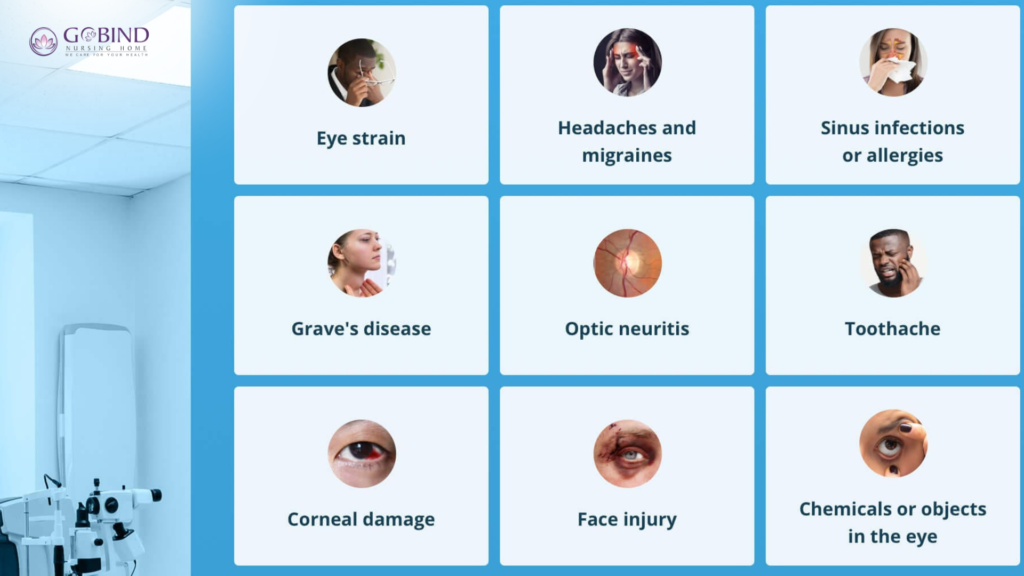
Common Causes of Eye Pain
1. Digital Eye Strain (Computer Vision Syndrome)
Prolonged use of mobile phones, laptops, and tablets is one of the most common causes of eye discomfort today. Symptoms include:
- Eye strain and fatigue
- Burning or dry eyes
- Blurred vision
- Headaches
Reduced blinking while staring at screens leads to dryness and irritation. Eye specialists recommend regular breaks and proper screen ergonomics to reduce strain.
2. Dry Eye Syndrome
Dry eyes occur when the eyes do not produce enough tears or when tears evaporate too quickly. Common causes include:
- Excessive screen use
- Air-conditioned environments
- Aging
- Hormonal changes
- Certain medications
Symptoms include itching, redness, burning, and a gritty sensation. At Gobind Eye Care, advanced diagnostic tools help determine the severity of dry eye and guide treatment.
3. Eye Infections
Bacterial, viral, or fungal infections can cause significant eye pain. Common infections include:
- Conjunctivitis (pink eye)
- Keratitis (corneal infection)
- Blepharitis (eyelid inflammation)
Symptoms often include redness, discharge, swelling, pain, and sensitivity to light. Immediate evaluation by an eye specialist is essential to prevent vision damage.
4. Allergies
Eye allergies are triggered by dust, pollen, pet dander, or pollution. They can cause:
- Itchy, watery eyes
- Redness
- Swelling
- Burning sensation
Although allergies may seem minor, chronic rubbing of eyes can worsen discomfort and lead to complications.
5. Refractive Errors
Uncorrected vision problems such as:
- Nearsightedness (myopia)
- Farsightedness (hyperopia)
- Astigmatism
can force your eyes to work harder, leading to pain, headaches, and eye fatigue. Regular eye check-ups at a best eye care hospital ensure timely correction with glasses or contact lenses.
6. Eye Injuries or Foreign Bodies
Dust, sand, metal particles, or accidental scratches can cause immediate pain, redness, and tearing. Never rub your eyes or attempt to remove objects forcefully. An experienced eye surgeon should examine the eye to avoid corneal damage.
7. Sinus-Related Eye Pain
Inflamed sinuses can create pressure around the eyes, forehead, and nose, leading to dull eye pain. Treating the underlying sinus issue often relieves the discomfort.
8. Serious Eye Conditions
Some eye pains may indicate serious conditions that require urgent medical attention, such as:
- Glaucoma (especially acute angle-closure glaucoma)
- Uveitis
- Optic neuritis
- Retinal problems
These conditions may cause severe pain, redness, blurred vision, halos around lights, or sudden vision loss. Immediate consultation at Gobind Eye Care, a leading eye care hospital, is critical.
When Should You See an Eye Specialist?
You should consult an eye specialist immediately if you experience:
- Severe or sudden eye pain
- Vision loss or double vision
- Eye injury or trauma
- Persistent redness or discharge
- Sensitivity to light
- Headache with eye pain
Early diagnosis at a best eye care hospital can protect your vision and prevent permanent damage.
Diagnosis of Eye Pain
At Gobind Eye Care, diagnosis involves:
- Detailed eye examination
- Vision testing
- Slit-lamp evaluation
- Tear film assessment
- Eye pressure measurement
- Advanced imaging (if required)
These tests help eye specialists identify the exact cause and recommend appropriate treatment.
Treatment Options for Eye Discomfort
Treatment depends on the underlying cause and may include:
- Lubricating eye drops for dryness
- Prescription medications for infections or inflammation
- Allergy management
- Vision correction with glasses or lenses
- Surgical intervention by an experienced eye surgeon for serious conditions
A personalized treatment approach ensures faster relief and long-term eye health.
How to Prevent Eye Pain
Preventive care plays a major role in avoiding eye discomfort:
- Follow the 20-20-20 rule during screen use
- Blink frequently and keep eyes hydrated
- Wear protective eyewear
- Maintain proper lighting while reading
- Get regular eye check-ups
- Avoid rubbing your eyes
Routine visits to a trusted eye care hospital like Gobind Eye Care help detect issues early.
Why Choose Gobind Eye Care?
Gobind Eye Care is recognized as a best eye care hospital, offering:
- Experienced eye specialists
- Advanced diagnostic and surgical technology
- Comprehensive eye care for all age groups
- Patient-centric, ethical treatment
Whether it’s routine eye discomfort or complex eye surgery, Gobind Eye Care is committed to preserving and enhancing your vision.
Conclusion
Eye pain is not something to ignore. While some causes are minor and temporary, others may threaten your eyesight if left untreated. Understanding the symptoms, identifying triggers, and seeking timely care from a qualified eye specialist can make all the difference.
If you or your loved ones experience persistent eye discomfort, consult Gobind Eye Care, a trusted eye care hospital, for expert evaluation and treatment. Your eyes deserve the best care—because clear vision means a better quality of life.
Also Read