
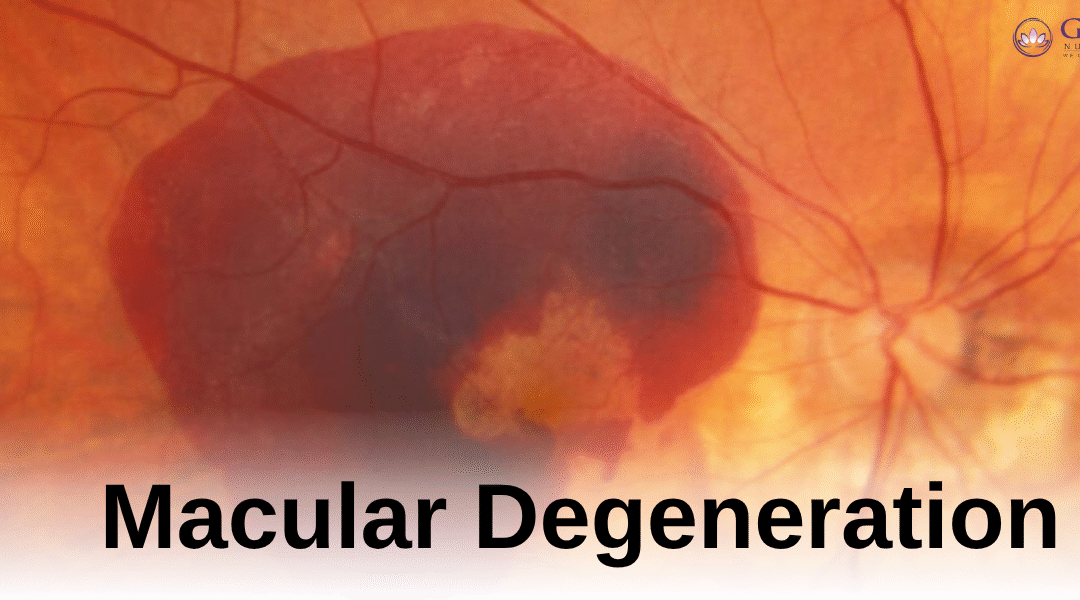
When you look at someone’s face, read a book, or drive a car, your eyes rely on a small but vital part of the retina called the macula. The macula helps you see fine details clearly. But what happens when this sensitive area starts to deteriorate? This condition is known as macular degeneration, a leading cause of vision loss, especially in people over 50.
In this guide, we’ll discuss what macular degeneration is, its causes, how it affects your vision, and how you can protect your eyes. Whether you are experiencing symptoms or just want to take better care of your vision, this post will help you understand why eyecare is important and why seeing an eye specialist early can make a difference.
What Is Macular Degeneration?
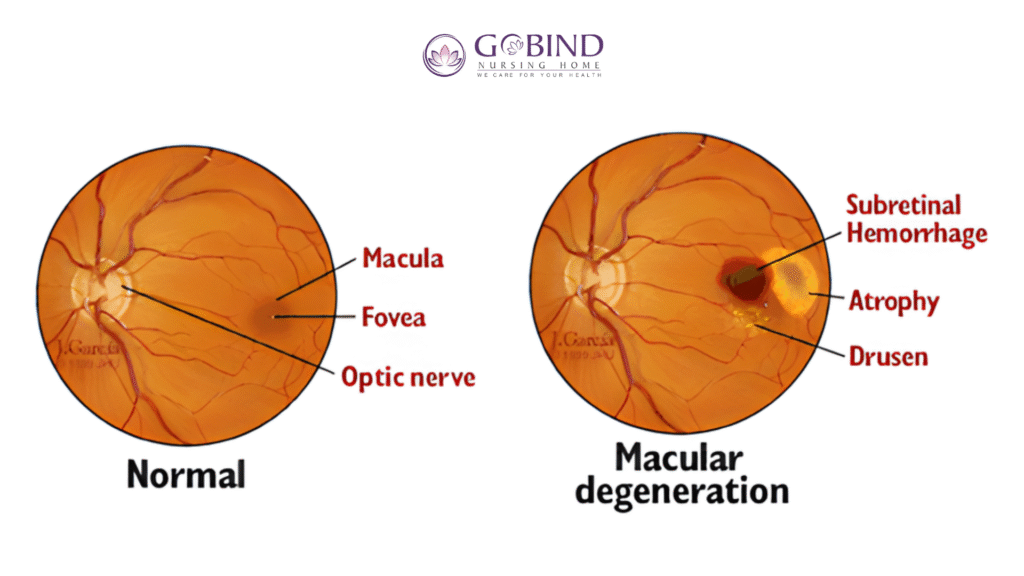
The retina is a thin tissue layer at the back of your eye that captures light and sends signals to your brain. At the center of the retina is the macula, responsible for your central vision—the sharp, straight-ahead vision you need for activities like reading, writing, and recognizing faces.
Macular degeneration, also known as age-related macular degeneration (AMD), is a disease that damages the macula and leads to blurred or reduced central vision. Peripheral (side) vision typically stays intact, so people can still move around and see general shapes, but details become hard or impossible to see clearly.
There are two main types of macular degeneration:
Dry AMD (Atrophic):
This is the more common type, making up about 80 to 90% of cases. It occurs when light-sensitive cells in the macula break down gradually over time, resulting in slow vision loss.
Wet AMD (Neovascular):
This type is less common but more serious. It happens when abnormal blood vessels grow under the retina and leak fluid or blood, causing rapid damage to the macula and faster vision loss.
Both forms can seriously affect your quality of life, making early detection and management essential.
Symptoms of Macular Degeneration
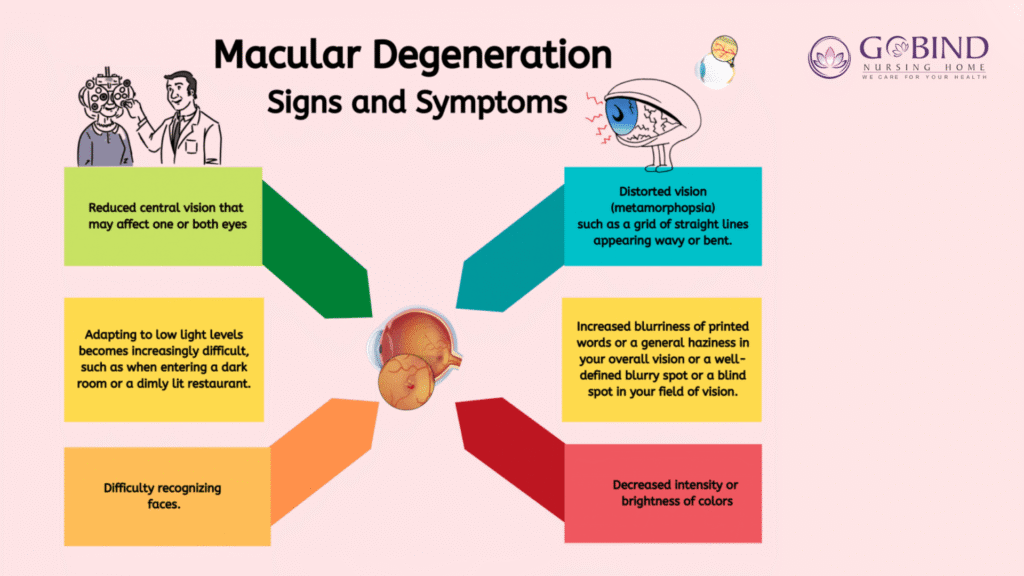
Macular degeneration usually develops slowly and without pain, so symptoms may not show up until the condition is advanced. Here are common warning signs to watch for:
– Blurriness in the center of your vision
– Difficulty recognizing faces
– Needing brighter light when reading
– Colors appearing dull or faded
– Dark, blurry, or empty spots in your vision
– Straight lines appearing wavy or distorted
If you notice any of these symptoms, it’s crucial to see an eye specialist right away. Early diagnosis can slow the disease’s progression and help preserve your remaining vision.
At Gobind Nursing Home, our skilled eye specialists use advanced diagnostic tools to spot even the earliest signs of macular degeneration. With the right treatment plan and regular monitoring, you can maintain better vision and improve your quality of life.
Who Is at Risk for Macular Degeneration?
Several factors can raise your risk of developing AMD. Knowing these factors is the first step in prevention:
– Age: The risk increases significantly after age 50.
– Family History: If macular degeneration runs in your family, your chances are higher.
– Smoking: Smokers are up to four times more likely to develop AMD.
– High Blood Pressure and Cholesterol: Poor circulation can harm retinal blood vessels.
– Obesity and Poor Diet: A lack of nutrients like zinc and antioxidants can worsen retinal damage.
– Excessive Sunlight Exposure: UV rays can injure the delicate cells in the retina.
– Gender: Women are slightly more at risk than men.
Even if you are at high risk, it’s not unavoidable. With proper eyecare, lifestyle changes, and regular eye checkups at a trusted facility like Gobind Eye Care, you can lower your risk and protect your eyesight.
How Is Macular Degeneration Diagnosed?
An eye specialist can spot macular degeneration through a thorough eye examination that includes:
– Visual Acuity Test: This checks how well you see at different distances.
– Amsler Grid Test: A simple test where you look at a grid of straight lines to see if they appear distorted.
– Dilated Eye Exam: Special eye drops widen your pupils so that the retina can be examined in detail.
– Optical Coherence Tomography (OCT): This provides detailed images of the retina’s structure.
– Fluorescein Angiography: This uses a dye to highlight abnormal blood vessels in the retina.
These tests help identify the type and severity of AMD, allowing your eye specialist to determine the best treatment.
Treatment Options for Macular Degeneration
While there’s currently no complete cure for macular degeneration, several treatments can slow its progression and help preserve vision.
1. Lifestyle and Nutrition
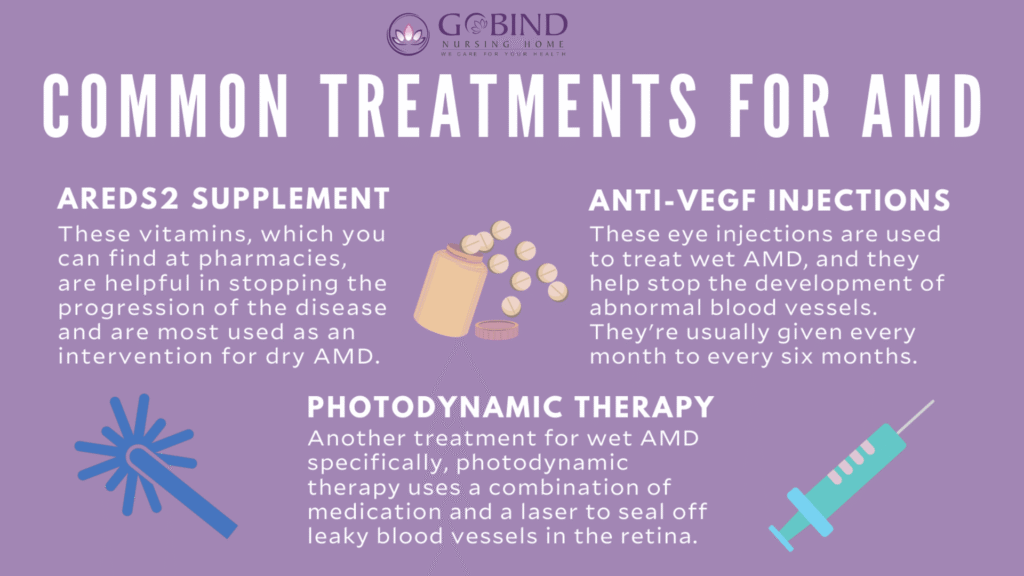
A diet rich in antioxidants, omega-3 fatty acids, zinc, and lutein supports retinal health. Foods like spinach, kale, carrots, fish, eggs, and nuts are especially helpful. For smokers, quitting is one of the best steps you can take for your eyecare. Controlling blood pressure, maintaining a healthy weight, and using sunglasses to protect your eyes from UV light are also important.
2. Medications (for Wet AMD)
Certain injections, called anti-VEGF treatments, can block the growth of abnormal blood vessels in the retina. These medications, including ranibizumab, bevacizumab, and aflibercept, are given directly into the eye by a trained eye specialist. At Gobind eye care, these injections are administered under sterile conditions with expert precision for safety and comfort.
3. Laser Therapy
In some cases of wet AMD, laser treatment may seal leaking blood vessels and prevent further damage. This quick outpatient procedure is done by an experienced ophthalmologist.
4. Low Vision Aids
For individuals with advanced AMD, low-vision aids such as magnifiers, special reading glasses, and digital devices can enhance daily activities and independence.
Can Macular Degeneration Be Prevented?
While age and genetics are beyond our control, certain steps can significantly lower your risk:
– Get regular eye checkups. Early detection is key. Visit your eye specialist at least once a year after age 40.
– Eat a balanced diet. Include green leafy vegetables, colorful fruits, and foods rich in omega-3s.
– Quit smoking. Smoking damages blood vessels in the retina and increases your risk of AMD.
– Protect your eyes. Wear UV-blocking sunglasses when outdoors.
– Manage other health conditions. Keep your blood pressure, cholesterol, and diabetes under control.
– Exercise regularly. This improves blood flow and overall eye health.
At Gobind Eye Care, our team focuses on preventive eyecare as much as treatment. Through patient education and regular screenings, we aim to identify issues early—before they threaten your sight.
Living With Macular Degeneration
Receiving a diagnosis of macular degeneration can be emotionally tough. Losing sharp central vision can make reading, driving, and recognizing faces challenging. However, it’s important to remember that macular degeneration doesn’t lead to total blindness. Most people retain enough peripheral vision to live active, independent lives.
Here are some practical tips for living better with AMD:
– Use brighter lighting in your home and workspace.
– Increase font sizes on digital devices and books.
– Use high-contrast colors (like black text on a white background) for better visibility.
– Take advantage of low-vision rehabilitation services.
– Stay positive and seek support groups or counseling if necessary.
At Gobind Eye care, patients receive guidance not just in medical treatment but also in emotional and lifestyle adjustments that enhance their quality of life.
Why Regular Eyecare Matters
Your eyes are your windows to the world, and they need regular care. Many eye diseases, including macular degeneration develop silently. By the time symptoms appear, significant damage may have occurred.
That’s why regular eyecare and consultations with a trusted eye specialist are essential. With modern diagnostic tools and personalized care plans, you can catch problems early, slow disease progression, and maintain healthy vision for years.
At Gobind eye care, one of the best eye hospital in hisar, our mission is to protect your vision through expert care, advanced technology, and compassionate service. Whether you’re managing macular degeneration or seeking preventive care, our team is dedicated to helping you see clearly and live fully.
Conclusion
Macular degeneration may be a common age-related eye disease, but it doesn’t have to mean losing clear vision. With awareness, early detection, and proper treatment, you can protect the part of your eye that sees details.
Remember that good eyecare is not only about treating disease—it’s about maintaining your quality of life. Regular eye exams at trusted centers like Gobind Nursing Home, healthy lifestyle choices, and a proactive approach can make a significant difference.
Your eyesight deserves your attention today, so you can continue to enjoy life’s beautiful details tomorrow.