
Diabetes is one of the most common chronic health conditions in the world, affecting millions of people across all age groups. While most people know about its impact on the heart, kidneys, and nerves, fewer realize how severely it can affect the eyes—specifically the retina, the light-sensitive layer at the back of the eye.
This condition, known as diabetic retinopathy, is one of the leading causes of preventable blindness in adults.
At Gobind Eye Care, we believe that awareness is the first step to prevention. Let’s explore what diabetic retinopathy is, how it develops, and what you can do to protect your vision.
What Is Diabetic Retinopathy?
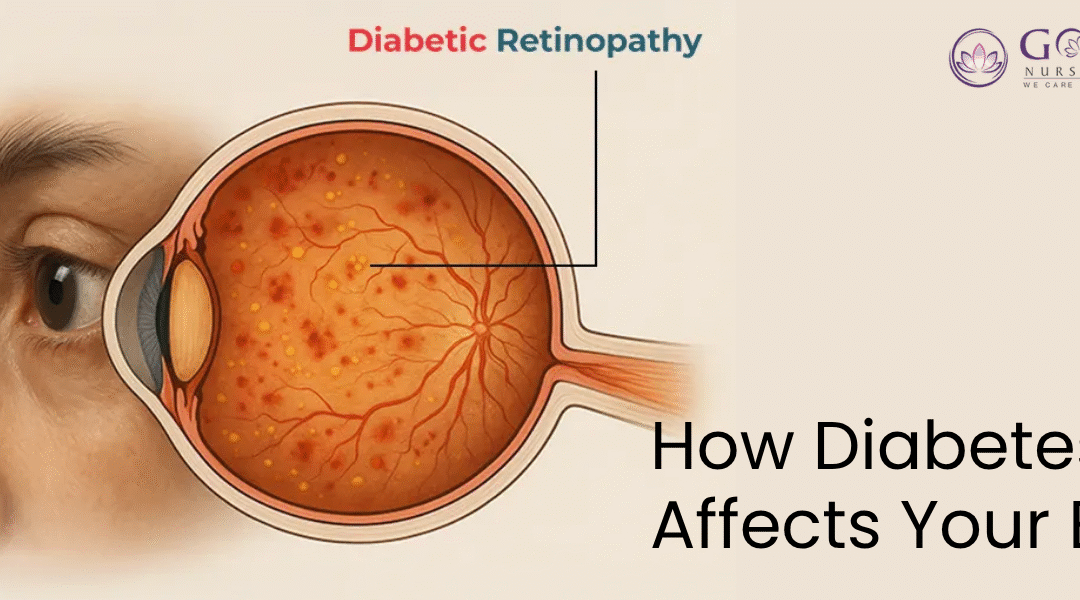
Diabetic retinopathy is an eye condition caused by damage to the small blood vessels in the retina due to high blood sugar levels. Over time, elevated glucose weakens these vessels, leading to leakage, swelling, or even complete blockage of blood flow.
If untreated, it can cause permanent vision loss.
There are two main stages of diabetic retinopathy:
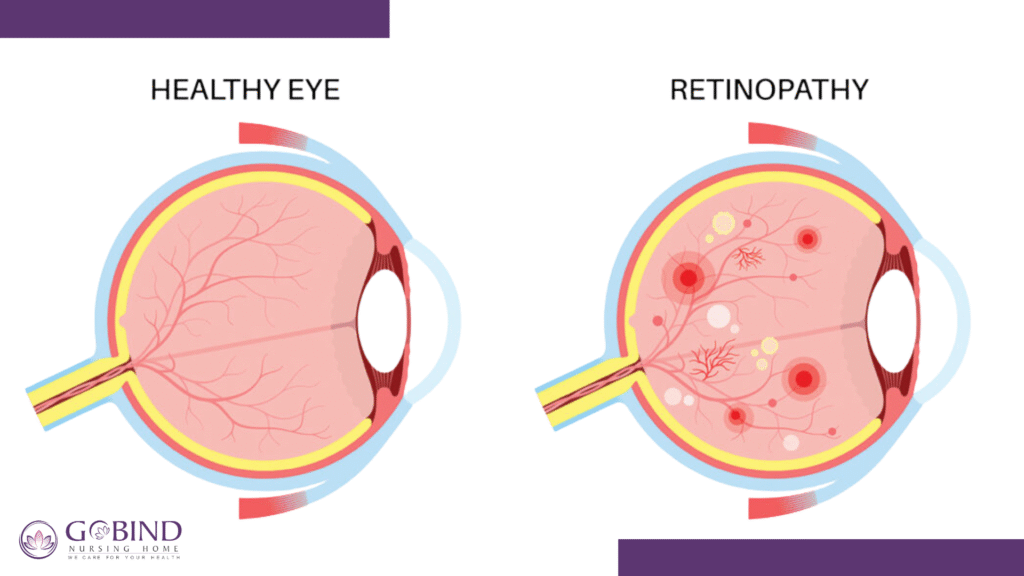
Non-Proliferative Diabetic Retinopathy (NPDR):
This is the early stage where the retinal blood vessels start leaking fluid or blood. Vision may become blurred, but symptoms are often mild or unnoticed.
Proliferative Diabetic Retinopathy (PDR):
In this advanced stage, new abnormal blood vessels grow on the retina, which can lead to scarring and retinal detachment — a serious condition that may cause blindness.
Regular checkups at a trusted clinic like Gobind Eye Care can help detect these changes early, even before you notice symptoms.
How Diabetes Affects the Retina
High blood sugar damages the delicate network of capillaries that nourish the retina. This damage causes:
- Microaneurysms: Tiny bulges in blood vessels that may leak fluid.
- Retinal swelling (macular edema): Leads to blurry vision and difficulty seeing fine details.
- Hemorrhages: Bleeding inside the retina, clouding vision.
- Abnormal vessel growth: Fragile new vessels form, which can rupture easily.
Over time, this continuous damage affects the retina’s ability to transmit clear images to the brain, leading to progressive vision deterioration.
Who Is at Risk?
Anyone with diabetes (Type 1 or Type 2) is at risk of developing diabetic retinopathy. However, the likelihood increases with certain factors:
- Long duration of diabetes
- Poor blood sugar control
- High blood pressure or cholesterol
- Pregnancy
- Smoking
- Kidney disease
At Gobind Eye Care, we emphasize that maintaining optimal blood sugar and blood pressure levels can drastically reduce your risk of diabetic eye disease.
Common Symptoms of Diabetic Retinopathy
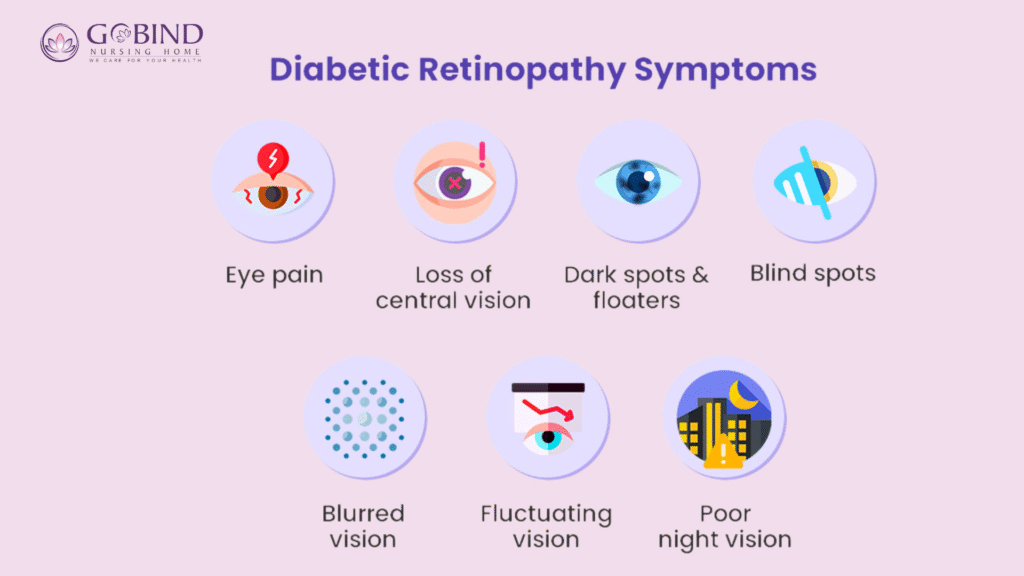
Diabetic retinopathy often develops silently. In the early stages, you might not experience any noticeable symptoms. However, as it progresses, you may observe:
- Blurred or fluctuating vision
- Dark spots or “floaters” in your field of view
- Poor night vision
- Colors appearing faded or washed out
- Sudden vision loss
If you notice any of these symptoms, seek immediate evaluation at Gobind Eye Care. Early detection through a comprehensive dilated eye exam can prevent serious complications.
Diagnosis at Gobind Eye Care
At Gobind Eye Care, our experienced ophthalmologists use advanced diagnostic tools to identify even the earliest signs of diabetic retinopathy. Common tests include:
- Dilated Eye Exam: Allows the doctor to see detailed images of your retina.
- Optical Coherence Tomography (OCT): A non-invasive scan that captures cross-sectional images of the retina to detect swelling.
- Fluorescein Angiography: Involves injecting a dye into your bloodstream to highlight leaking or blocked vessels.
These cutting-edge diagnostic methods enable our specialists to create a personalized treatment plan tailored to your stage of retinopathy.
Treatment Options for Diabetic Retinopathy
Treatment depends on the severity of the disease. At Gobind Eye Care, we offer several evidence-based options to preserve and restore your vision.
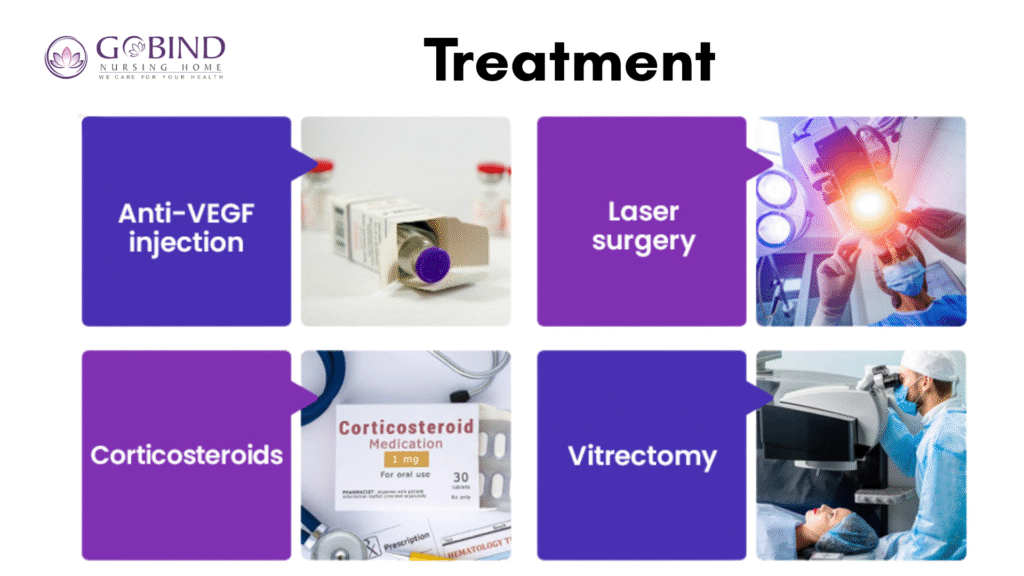
1. Laser Therapy (Photocoagulation)
This treatment seals leaking blood vessels and prevents abnormal new vessels from forming. It is one of the most effective ways to stop progression in early to moderate stages.
2. Anti-VEGF Injections
These medications (such as Avastin, Eylea, or Lucentis) block abnormal vessel growth and reduce retinal swelling. They are administered directly into the eye under sterile conditions.
3. Vitrectomy Surgery
For advanced cases, surgery may be needed to remove blood from the vitreous (the gel inside the eye) and repair retinal detachment.
The retina specialists at one of the best eye care centres, Gobind Eye Care use the latest technology and surgical precision to ensure the best possible outcomes.
Prevention: How to Protect Your Eyes from Diabetic Damage
Preventing diabetic retinopathy starts with good diabetes management. Here are some essential steps recommended by the experts:
- Control blood sugar levels: Keep your HbA1c below 7% (or as advised by your doctor).
- Monitor blood pressure and cholesterol: These directly affect blood vessel health.
- Get regular eye exams: At least once a year, even if you have no symptoms.
- Quit smoking: Smoking worsens blood vessel damage.
- Exercise regularly: Improves blood circulation and overall health.
- Eat a balanced diet: Focus on green vegetables, omega-3 fatty acids, and low-glycemic foods.
Remember: Early detection saves vision. Most diabetic eye problems can be treated successfully if caught early.
Why Choose Gobind Eye Care?
Our mission is to combine compassion with cutting-edge technology to safeguard your vision. Here’s why patients across the region trust us:
- Experienced retina specialists
- Advanced diagnostic and surgical equipment
- Personalized treatment plans for every patient
- Comprehensive diabetic eye care under one roof
Our dedicated team works closely with endocrinologists and primary care physicians to ensure your eye health and diabetes care go hand in hand.
Diabetic retinopathy may sound alarming, but it doesn’t have to lead to vision loss. With regular monitoring, effective diabetes control, and professional care from experts like those at Gobind Eye Care, you can preserve your sight for years to come.
Don’t wait for symptoms to appear — book your diabetic eye screening. Your eyes deserve the best care, and your vision is worth protecting.