
Holi, the festival of colors, brings joy but often leads to eye issues from chemical-laden colors. Proper eye care prevents lasting damage and ensures quick recovery.
Gobind Nursing Home, Hisar has a team of highly qualified and experienced super specialist doctors covering all specialities(Cataract, Glaucoma, Cornea, Retina, Laser, Ocular allergies and all general diseases).
Why Holi Colors Harm Eyes
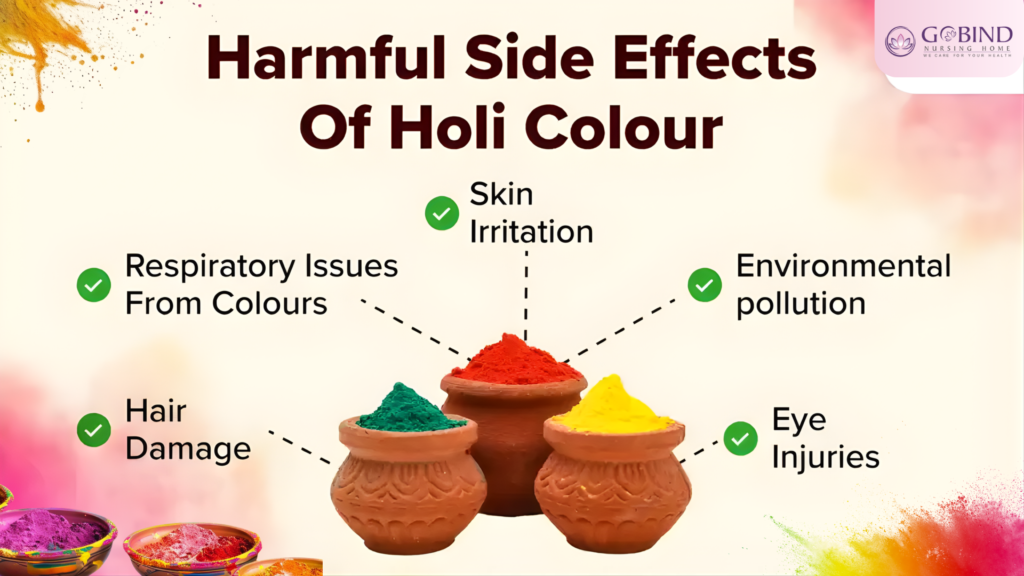
Synthetic Holi colors contain harmful chemicals like lead, mercury, and dyes that irritate eyes upon contact. Particles enter during play, causing immediate redness, burning, and inflammation, as reported by ophthalmologists post-festival. Water balloons worsen damage by forcing colors deeper into the eye surface.
Top Eye Problems Post-Holi
Common issues include conjunctivitis from infections, corneal abrasions from rubbing, and allergic reactions leading to itchy, watery eyes. Severe cases involve keratitis or temporary vision blur due to toxicity on the ocular surface. Dryness and eczema around eyelids also spike after exposure.
Immediate First Aid Steps
Rinse eyes with clean, lukewarm water or saline for 15-20 minutes without rubbing to flush out colors. Apply a cold compress using a clean cloth to reduce swelling and soothe irritation. Avoid contact lenses entirely, as they trap particles and heighten infection risk.
Home Remedies for Relief
Use lubricating eye drops or artificial tears to hydrate and cleanse residual particles. Chilled rose water rinses or cucumber slices on closed lids provide cooling relief from burning. Fresh aloe vera gel around eyes (not inside) calms redness, but skip if allergies exist.
When to See an Eye Specialist
Seek help if symptoms like persistent redness, pain, blurred vision, or swelling last over 24 hours. Delaying risks permanent corneal damage or chronic infections. Professional checks prevent complications like chemical keratitis.
Prevention Tips for Safe Holi
Wear protective goggles or sunglasses during play and opt for organic, herbal colors from natural sources like turmeric or beetroot. Wash face and eyes frequently with water, and avoid sharp throws or water bombs near eyes. Remove makeup before festivities to reduce trapping colors.
Professional Treatments Available
Eye specialists prescribe antibiotic drops for infections, steroid drops for inflammation, or anti-allergic meds for reactions. In advanced cases, eye surgeons may perform procedures to clear corneal abrasions. Regular follow-ups ensure full recovery.Do not use steroids without consulting an Eye-Specialist.
Role of Eye Care Centres
Dedicated eye care centres offer comprehensive post-Holi checkups with advanced diagnostics like slit-lamp exams. They provide tailored treatments from lubrication to surgery, emphasizing preventive eye care year-round.
Best Eye Hospital in Hisar
For residents in Haryana, the best eye hospital in Hisar delivers top-tier care with state-of-the-art facilities. Gobind Eye Care stands out as a premier choice, featuring expert eye surgeons skilled in handling Holi-related injuries efficiently.
Choosing an Eye Surgeon
Consult a qualified eye surgeon for precise diagnosis, especially if home remedies fail. They specialize in ocular trauma, using tools like OCT scans for deep tissue assessment. Experience matters in avoiding vision loss from festival mishaps.
Gobind Eye Care Expertise
Gobind Eye Care excels in eye care, treating everything from irritations to complex surgeries. Their team of eye specialists ensures personalized plans, making it a trusted name for post-Holi recovery and ongoing eye health.
Long-Term Eye Care Habits
Post-Holi, limit screen time to avoid strain and maintain hygiene to prevent secondary infections. Annual visits to an eye care centre keep vision sharp amid daily exposures. Hydrate eyes with drops in dry seasons for sustained comfort.
Also Read
What to Do If Holi Color Goes Into Your Eyes: Expert Eye Care Guide