
Glaucoma is often called the “silent thief of sight”, and for good reason. It develops slowly, without pain or early warning signs, and can cause irreversible vision loss if not detected in time. According to the World Health Organization, glaucoma is one of the leading causes of blindness worldwide. At Gobind Eye Care, we believe that awareness and early detection are the keys to protecting your vision for life.
In this article, we’ll explore what glaucoma is, its common types, causes, risk factors, and why regular eye check-ups at Gobind Eye Care can make all the difference.
What Is Glaucoma?
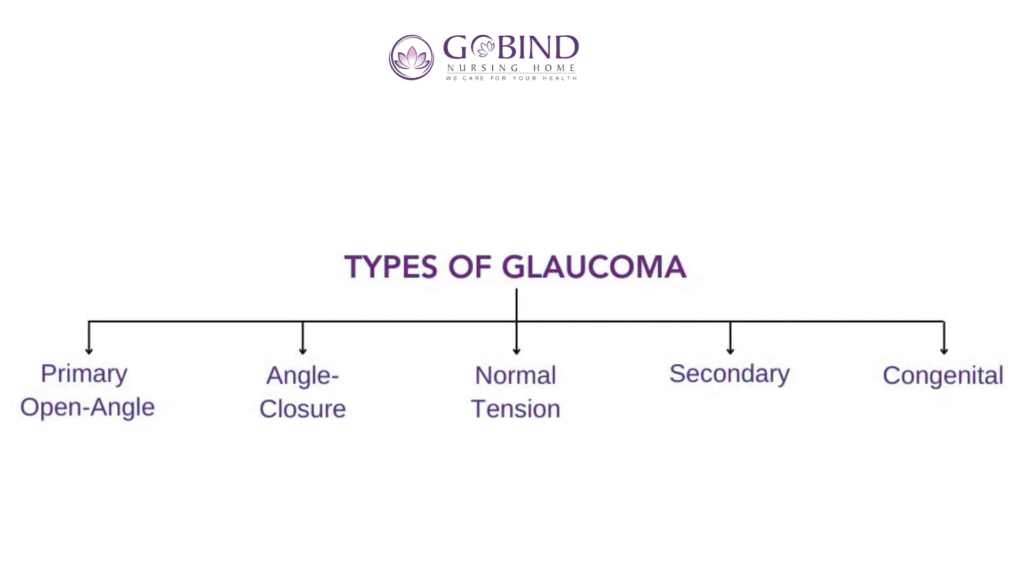
Glaucoma is not a single eye disease but a group of conditions that damage the optic nerve, the vital connection between your eye and brain. This damage is often caused by increased pressure inside the eye, known as intraocular pressure (IOP). Over time, elevated IOP can harm the optic nerve, leading to gradual vision loss.
At Gobind Eye Care, our eye specialists use advanced diagnostic tools to measure eye pressure and assess optic nerve health—helping detect glaucoma even before symptoms appear.
The Main Types of Glaucoma
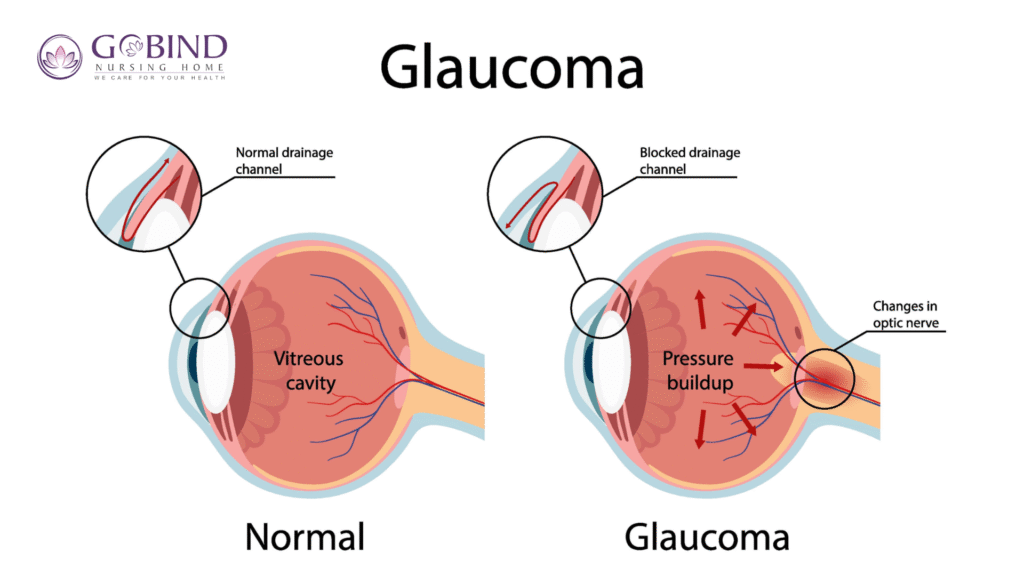
Understanding the different types of glaucoma can help you recognize the importance of personalized eye care. Here are the most common forms:
1. Primary Open-Angle Glaucoma (POAG)
This is the most common type of glaucoma. It occurs when the drainage canals in the eye become clogged over time, leading to a gradual increase in eye pressure. POAG develops slowly and painlessly, making regular screenings at Gobind Eye Care essential for early detection.
2. Angle-Closure Glaucoma
Also known as closed-angle glaucoma, this type occurs when the drainage angle in the eye suddenly becomes blocked, causing a rapid rise in eye pressure. Symptoms may include severe eye pain, headache, nausea, blurred vision, and halos around lights. It’s a medical emergency that requires immediate treatment.
3. Normal-Tension Glaucoma
In some people, optic nerve damage occurs even when eye pressure is within the normal range. This is known as normal-tension glaucoma, and its causes may be related to poor blood flow or increased optic nerve sensitivity. Regular examination at an Eye Care centre can help identify this subtle condition early.
4. Congenital Glaucoma
This rare form affects infants and young children and is usually caused by abnormal eye development. Symptoms may include cloudy eyes, excessive tearing, and light sensitivity. Pediatric specialists at Gobind Eye Care provide compassionate care for young patients and their families.
5. Secondary Glaucoma
Secondary glaucoma develops due to another eye condition, such as an injury, inflammation, tumor, or prolonged use of steroid medications. Managing the underlying cause is crucial to preventing vision damage.
Causes and Risk Factors
While the exact cause of glaucoma is not always clear, several factors can increase your risk:
- Age: People over 40 are at higher risk.
- Family History: If a parent or sibling has glaucoma, your risk doubles.
- High Eye Pressure: Elevated intraocular pressure is the most significant modifiable risk factor.
- Medical Conditions: Diabetes, high blood pressure, and heart disease can contribute to glaucoma risk.
- Ethnicity: People of African, Asian, and Hispanic descent are more prone to certain types of glaucoma.
- Eye Injury or Surgery: Past trauma or surgical complications can increase susceptibility.
At Gobind Nursing Home, our eye experts perform comprehensive evaluations to identify your personal risk factors and design a customized eye health plan.
Symptoms of Glaucoma
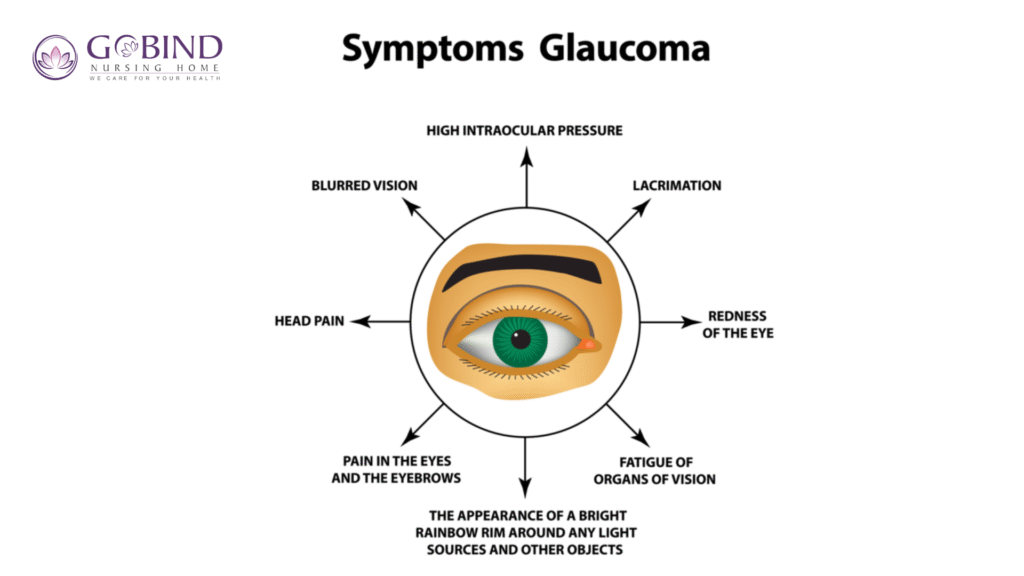
Glaucoma is notorious for developing without obvious symptoms in its early stages. However, as the disease progresses, you might notice:
- Gradual loss of peripheral (side) vision
- Blurred or hazy vision
- Halos around lights
- Eye pain or redness (especially in acute cases)
- Tunnel vision in advanced stages
Because symptoms often appear only after significant damage has occurred, regular eye check-ups at Gobind Eye Care are the best defense.
Diagnosis: How Gobind Eye Care Detects Glaucoma Early
Our glaucoma screening process combines advanced technology with expert evaluation. A typical exam may include:
- Tonometry – Measures intraocular pressure.
- Ophthalmoscopy – Examines the optic nerve for damage.
- Perimetry (Visual Field Test) – Detects blind spots in your vision.
- Pachymetry – Measures corneal thickness, which affects pressure readings.
- Optical Coherence Tomography (OCT) – Provides high-resolution images of the optic nerve and retina.
These tests are painless, quick, and crucial for early detection. Early diagnosis means better outcomes and more effective treatment options.
Treatment Options for Glaucoma
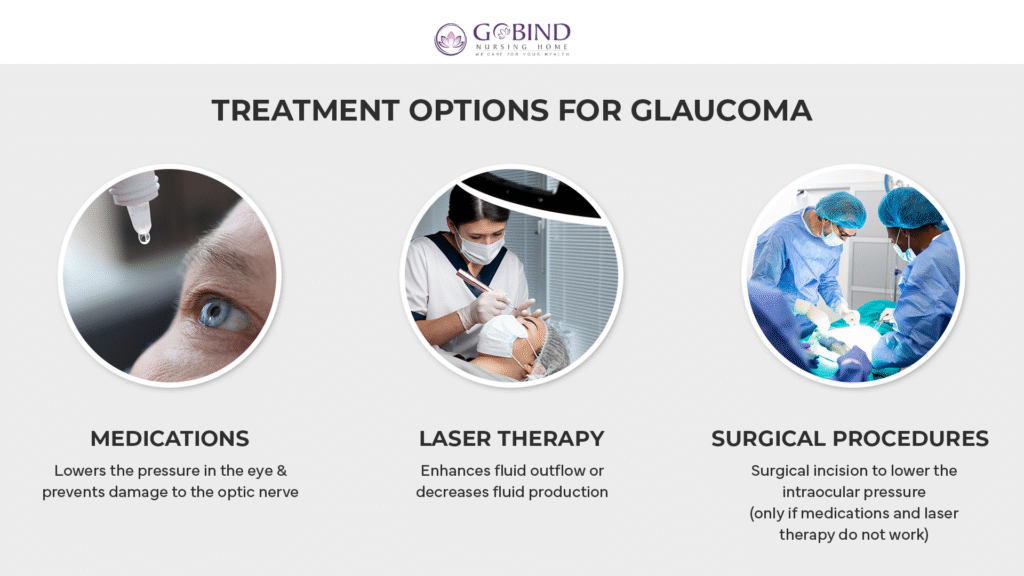
Although there is currently no cure for glaucoma, early treatment can slow or even halt its progression. At Gobind Eye Care, we provide individualized treatment plans using the latest techniques:
1. Prescription Eye Drops
The most common first-line treatment, eye drops reduce intraocular pressure by decreasing fluid production or improving drainage.
2. Oral Medications
Sometimes used alongside drops, these help lower eye pressure from within.
3. Laser Therapy
Procedures like Selective Laser Trabeculoplasty (SLT) or Laser Peripheral Iridotomy (LPI) can improve fluid drainage and reduce pressure.
4. Surgery
In advanced cases, surgeries such as trabeculectomy or drainage implants may be necessary to create new fluid pathways.
5. Lifestyle and Monitoring
Healthy habits—like regular exercise, balanced diet, and avoiding smoking—support overall eye health. Regular follow-ups at Gobind Eye Care ensure your condition stays under control.
Why Early Detection Matters
Glaucoma-related vision loss is permanent, but the good news is that early detection and proper management can preserve your sight for decades. Regular eye exams are especially vital for individuals over 40 or those with a family history of glaucoma.
Our mission is to make early detection accessible and affordable for everyone. With modern diagnostic tools and compassionate care, we help patients take proactive steps toward lifelong vision health.
Protecting Your Vision: Steps You Can Take Today
Here’s how you can start protecting your eyes from glaucoma:
- Schedule routine comprehensive eye exams at Gobind Eye Care
- Maintain a healthy diet rich in leafy greens and antioxidants
- Exercise regularly to promote good blood flow
- Avoid smoking and excessive caffeine
- Manage conditions like diabetes and hypertension
- Use prescribed eye drops consistently if you’ve been diagnosed
Your eyes deserve the best care—and that begins with awareness and prevention.
Glaucoma truly is a silent thief, but it doesn’t have to steal your vision. Through awareness, regular screenings, and expert treatment, blindness from glaucoma can often be prevented.
At Gobind Eye Care, we’re dedicated to safeguarding your sight with advanced technology, personalized care, and patient education. Don’t wait for symptoms—schedule your glaucoma screening today and take the first step toward a lifetime of clear, healthy vision.