

Of all the organs in our body, our eyes are among the most sensitive and vital; yet, we seem to take them for granted all the time. Whether going out on a quick errand, spending a day at the beach, or driving in the afternoon sun, prolonged exposure to the sun really takes its toll on eye health. Of the many possible repercussions, cataracts are the most common but often preventable eye condition associated with too much sunlight.
In this blog, we look at how sun exposure affects the development of cataracts, what one can do to safeguard the eyes, and some expert advice from Dr. Bindiya Dhupper (MBBS, MS Ophthalmology, Cornea Fellow, Cornea and Cataract Surgeon) at Gobind Nursing Home on lifelong eyecare.
Understanding Cataracts: A Common Yet Preventable Eye Condition
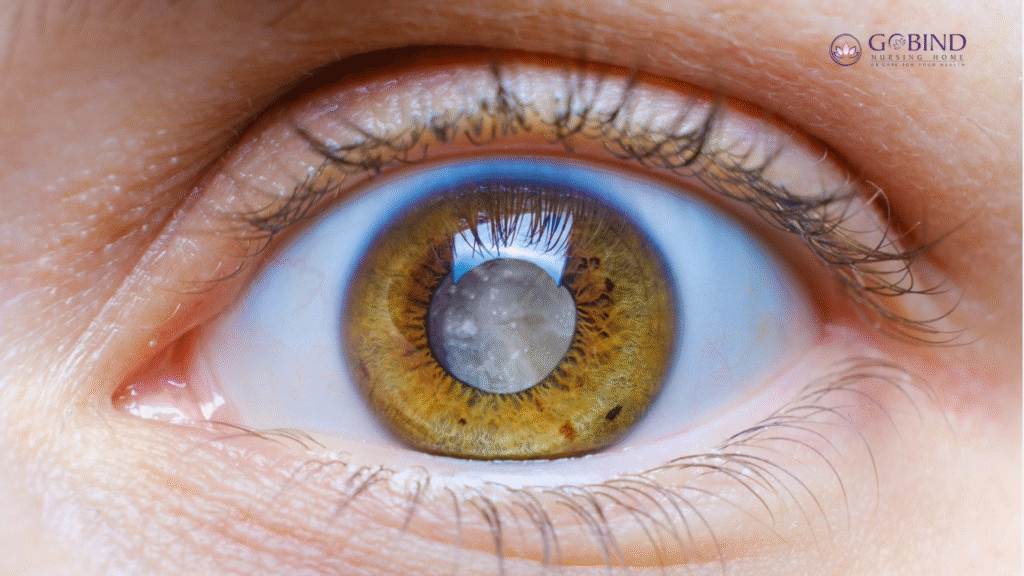
A cataract is a clouding of the eye’s natural lens that impairs vision. You can see sharp images because the lens is normally clear and helps focus light onto the retina. On the other hand, cataracts cause the lens to become cloudy, which results in glare, blurred vision, faded colors, and trouble seeing at night.
One of the main causes of blindness in the world, particularly for those over 50, is cataracts. Nonetheless, studies have demonstrated that the sun’s ultraviolet (UV) rays contribute significantly to the early development of cataracts, even in younger people.
How Sunlight Affects Your Eyes
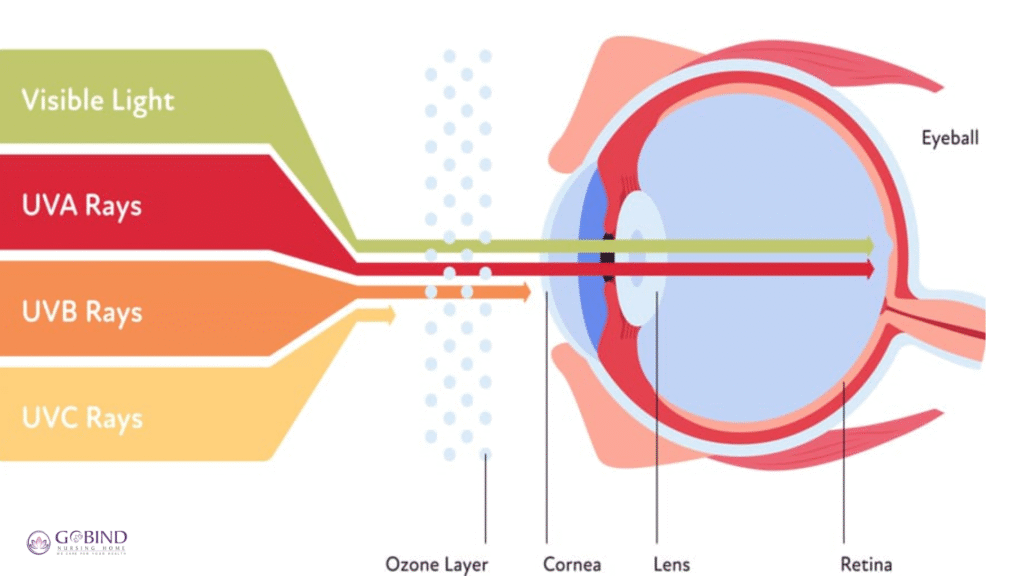
UV rays can harm your eyes in the same way that they can damage your skin. To shield the retina, the light-sensitive tissue at the rear of your eye, the cornea and lens naturally absorb UV rays. But over time, these sensitive tissues may experience structural alterations as a result of this ongoing exposure.
Gobind Nursing Home’s skilled eye specialist and cataract surgeon, Dr. Bindiya Dhupper, explains:
Proteins make up the lens of the eye, which keeps it flexible and clear. Long-term exposure to UV light can cause these proteins to degrade and aggregate, creating hazy areas; this is basically how cataracts form.
The more time you spend under direct sunlight without protection, the higher your risk becomes. This is especially true in tropical countries like India, where sunlight intensity is strong throughout most of the year.
The Science Behind UV Radiation and Cataracts
UVA, UVB, and UVC are the three forms of ultraviolet radiation that sunlight emits. Of these, UVA and UVB rays pass through the atmosphere, while UVC is absorbed by it and does not reach humans.
- UVA rays have the ability to penetrate deeply into the eye and cause long-term harm.
- UVB radiation directly contributes to the development of cataracts by affecting the frontal structures, including the cornea and lens.
According to studies, those who have been exposed to more UVB rays throughout their lives are much more likely to develop cortical cataracts, which develop around the edges of the lens. People who spend a lot of time outside, such as farmers, construction workers, athletes, or beachgoers, should take extra care to wear eye protection because of this.
Who Is Most in Danger?
- Although everyone who is exposed to sunlight is at risk, some things can increase your risk of developing cataracts as a result of UV damage:
- Workers outside (farmers, labourers, lifeguards, etc.)
- People who reside in tropical or high-altitude areas
- People who drive for extended periods of time
- People whose eyes are light in colour (because they absorb more UV light)
- Individuals who have a family history of cataracts
- People with diabetes or smoking , as these diseases raise oxidative stress in the eyes
Cataract Symptoms to Look Out For
Because cataracts develop slowly, symptoms might not show up until there has been substantial damage. The following are some early warning indicators to be aware of:
- hazy or blurry vision
- Having trouble seeing in direct sunlight
- Enhanced nighttime headlight glare
- Colour fading or yellowing
- Regular adjustments to the prescription for glasses
- In one eye, double vision
If you notice any of these symptoms, it’s time to see the top eye specialist in Hisar for a comprehensive eye examination.
How to Prevent Sun-Induced Cataracts in Your Eyes
One of the easiest and most efficient methods to avoid cataracts and other eye conditions like macular degeneration or photokeratitis is to protect your eyes from UV radiation. The following advice from Dr Bindiya Dhupper can help you keep up healthy eye care practices:
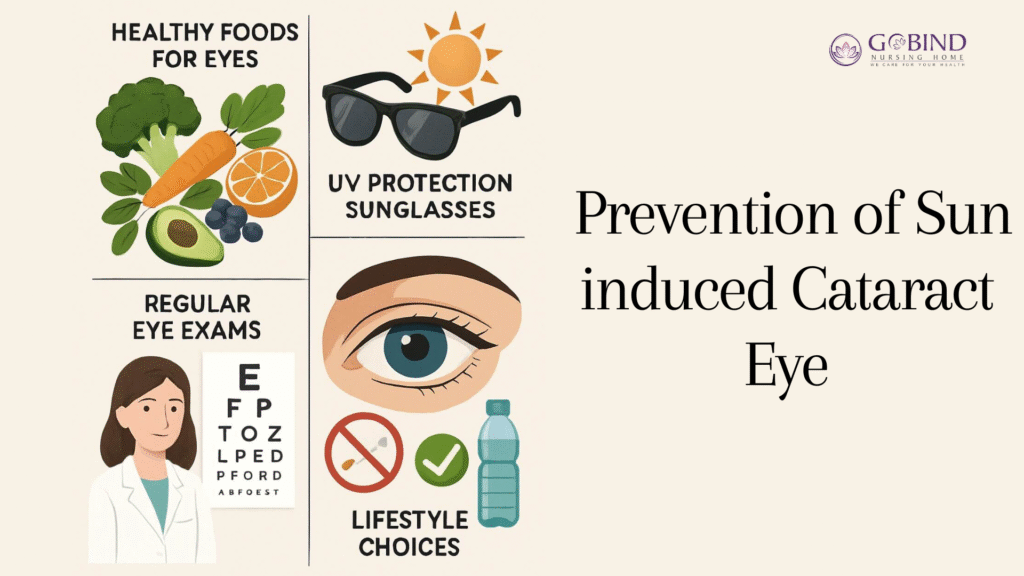
1. Put on sunglasses that block UV rays.
Select sunglasses that completely block UVA and UVB radiation. Wraparound frames are ideal as they prevent sunlight from entering from the sides.
Tip: Always check the UV label when purchasing sunglasses; darker lenses don’t necessarily mean better UV protection.
2. Put on a cap or hat with wide rims.
Up to 50% less UV rays can reach your eyes when you wear a hat. This is especially useful during midday when the sun’s rays are strongest (10 AM–4 PM).
3. Avoid Direct Sunlight During Peak Hours
Try to limit outdoor activities during peak sunlight hours. If you must go outside, use an umbrella or stay in shaded areas whenever possible.
4. Continue Eating a Balanced Diet
Antioxidant-rich foods, particularly those high in lutein, zeaxanthin, vitamin C, and vitamin E, can help shield your eyes from oxidative damage. Eat a diet rich in citrus fruits, nuts, leafy greens, and carrots.
5. Stay Hydrated
Dehydration can make your eyes feel dry and irritated, especially in bright sunlight. Drinking enough water supports overall eye health.
6. Regular Eye Check-Ups
Routine eye examinations are key to detecting cataracts early. We usually recommend a comprehensive eye check-up at least once every year, especially for people above 40.
7. Limit alcohol intake and abstain from smoking.
Smoking and binge drinking both raise oxidative stress, which hastens cataract development and lens damage.
8. In situations involving high exposure, wear protective eyewear.
Wear the proper safety goggles when skiing, working near reflective surfaces, or near welding equipment. UV exposure can be increased by reflected sunlight, particularly from metal, water, or snow.
Cataract Treatment Options
The only effective treatment for a cataract is surgery once it has developed and begins to seriously impair your vision. A clear, artificial intraocular lens (IOL) is used in place of the cloudy lens during modern, extremely safe, and accurate cataract surgery.
At Gobind Nursing Home, Dr. Bindiya Dhupper, a skilled cornea and cataract surgeon, specializes in advanced micro-incision cataract surgery and phacoemulsification techniques that ensure faster recovery and minimal discomfort.
Post-surgery, patients are advised to continue using UV-protective eyewear to prevent further sun-related damage to other eye structures.
The Importance of Comprehensive Eyecare
UV exposure is linked to a number of conditions, including cataracts. Long-term exposure to the sun can also cause:
- Surfer’s eye, or pterygium, is a growth on the white portion of the eye.
- Macular degeneration – damage to the retina leading to central vision loss
- A brief but excruciating “sunburn” of the cornea is called photokeratitis.
Because of this, holistic eye care aims to shield your eyes from common environmental risks in addition to correcting your vision.
Conclusion
Although the sun provides us with warmth and light, over time, its invisible UV rays can subtly harm our eyes. Once thought to be an unavoidable aspect of aging, cataracts can now be largely avoided with the correct care and prompt intervention.
Don’t disregard any changes in your vision, discomfort, or light sensitivity. For a comprehensive examination, see an eye specialist. Dr. Bindiya Dhupper and her staff at Gobind Nursing Home provide thorough diagnostic and surgical services that are intended to safeguard and maintain your vision for many years to come.