

By Dr. Bindiya Dhupper – Experienced Eye Specialist, Gobind Eye Care
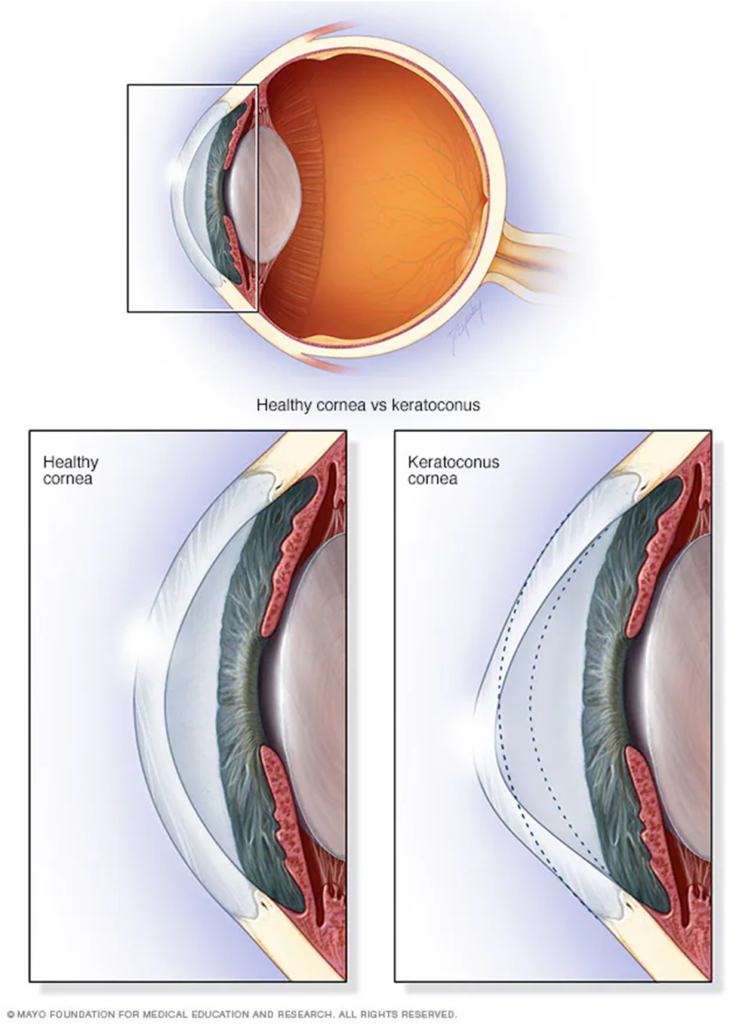
Keratoconus is a progressive eye condition that affects the cornea—the transparent, dome-shaped front surface of the eye responsible for focusing light. As the condition advances, the cornea becomes thin, weak, and irregularly shaped, leading to distorted vision. Early diagnosis and timely treatment can preserve vision and prevent complications.
As an experienced eye specialist at Gobind Eye Care, Dr. Bindiya Dhupper emphasizes that understanding keratoconus is the first step toward early detection and effective management.
What Is Keratoconus?
Keratoconus is a degenerative disorder in which the normally round cornea gradually becomes cone-shaped. This irregular shape prevents light from focusing correctly on the retina, causing blurred and distorted vision.
The condition typically begins in the teens or early twenties and may progress for several years before stabilizing.
What Causes Keratoconus?
While the exact cause is not fully understood, several factors contribute to the development of keratoconus:
1. Genetic Predisposition
Keratoconus often runs in families. A person with a family history of the condition is at a higher risk. Genetic abnormalities affecting collagen and corneal strength may play a role.
2. Eye Rubbing
Aggressive or frequent eye rubbing is one of the most significant risk factors. It can weaken the cornea and accelerate the progression of keratoconus—especially in individuals with underlying allergies.
3. Allergies and Eye Inflammation
Conditions like allergic conjunctivitis, asthma, eczema, and hay fever can trigger inflammation. Chronic eye irritation often leads to rubbing, which further increases risk.
4. Hormonal Changes
Puberty and pregnancy can influence corneal structure. Many patients notice progression during these periods due to hormonal fluctuations.
5. Connective Tissue Disorders
People with conditions such as Down syndrome, Marfan syndrome, or Ehlers–Danlos syndrome have a higher incidence of keratoconus due to weaker collagen structures.
Common Symptoms of Keratoconus
Keratoconus symptoms can vary depending on the stage of the condition. In the early stages, symptoms may be subtle and often confused with regular refractive errors like myopia (nearsightedness) or astigmatism.
Early Symptoms
- Blurred or distorted vision
- Frequent changes in eyeglass prescription
- Increased sensitivity to light (photophobia)
- Difficulty seeing clearly at night
- Eye strain or headaches
Advanced Symptoms
As the cornea becomes thinner and more irregular, symptoms worsen:
- Ghosting or double vision (monocular diplopia)
- Halos and glare around lights
- Rapid progression of astigmatism
- Clouding of the cornea due to scarring
Early Warning Signs You Should Never Ignore
Dr. Bindiya Dhupper stresses the importance of identifying early indicators because keratoconus is easier to manage in its initial stages. Look out for these signs:
1. Frequent Prescription Changes
If your glasses or contact lens power changes more often than usual, it may be a red flag.
2. Sudden Increase in Astigmatism
Developing or rapidly increasing astigmatism is a common early warning sign of corneal irregularity.
3. Blurry Vision Not Improved by Glasses
When standard lenses fail to provide clear vision, it suggests the cornea may have become irregular.
4. Light Sensitivity and Glare
Increasing sensitivity to light, especially while driving at night, is an early indication of corneal changes.
5. Persistent Eye Rubbing
Constant itching or rubbing is often a precursor to keratoconus progression. Addressing allergies early can reduce risk.
Why Early Detection Matters
Early diagnosis helps slow or halt the progression of keratoconus. Treatments like Corneal Cross-Linking (CXL) work best during the early stages when the cornea has not yet become severely deformed. Left untreated, advanced keratoconus may require specialty contact lenses or even corneal transplant surgery.
At Gobind Eye Care, Dr. Bindiya Dhupper uses advanced diagnostic tools like corneal topography and tomography to detect even subtle corneal irregularities before symptoms become severe.
How Keratoconus Is Diagnosed
- Dilated Retinoscopy:
Scissoring reflex on wet retinoscopy
- Corneal Pachymetry
Measures corneal thicknes—critical for identifying thinning.
- Corneal Tomography (Pentacam/Orbscan)
Provides a 3D view of the cornea for accurate diagnosis and staging.
Treatment Options for Keratoconus
Management depends on the severity and progression:
1. Glasses and Soft Contact Lenses
Useful in very early stages.
2. Rigid Gas Permeable (RGP) or Scleral Lenses
These specialty lenses provide clearer vision by masking corneal irregularities.
3. Corneal Cross-Linking (CXL)
A minimally invasive procedure that strengthens the cornea and prevents progression. It is the most effective early-stage treatment.
4. Intacs (Corneal Implants)
Small corneal segments that help reshape the cornea.
5. Corneal Transplant
Required only in severe cases with significant scarring or thinning.
When to Visit a Specialist
If you or your child experience unexplained visual changes or frequent prescription updates, it is important to visit a keratoconus specialist. Early screening can prevent long-term damage.
Dr. Bindiya Dhupper at Gobind Eye Care offers comprehensive keratoconus evaluation and customized treatment plans tailored to each patient’s needs.
Keratoconus is a manageable condition—especially when detected early. By understanding its causes, recognizing symptoms, and acting on early warning signs, patients can preserve their vision and maintain quality of life.
If you suspect you may have keratoconus or need expert evaluation, consult Dr. Bindiya Dhupper at Gobind Eye Care for a detailed assessment and personalized guidance.
Read More:- What Is Retinal Detachment? Causes, Symptoms, and Treatment Explained