
Holi, the vibrant festival of colours, fills our lives with joy, laughter, and unforgettable memories. But while you are busy drenching friends in colour and celebrating the arrival of spring, your eyes are silently bearing the brunt of chemical-laden gulal, water balloons, and coloured sprays. At Gobind Eye Care Centre, our experienced eye specialists see a significant rise in eye-related complaints every year after Holi — from redness and irritation to serious infections and corneal damage.
Whether you are an adult or a parent worried about your child’s eye health, this comprehensive post-Holi eye care guide will walk you through everything you need to know to keep your vision safe and healthy. Follow these tips recommended by the experts at our eye care centre, and do not hesitate to visit an eye specialist if symptoms persist.
Why Holi Colours Are Dangerous for Your Eyes
Most synthetic Holi colours available in the market today contain heavy metals, industrial dyes, mica, and toxic chemicals such as lead oxide, chromium iodide, and copper sulphate. When these substances come into contact with your eyes, they can cause:
- Acute chemical conjunctivitis (pink eye)
- Corneal abrasions and scratches
- Allergic reactions and severe itching
- Temporary or permanent vision impairment
- Secondary bacterial or fungal infections
Even herbal or organic Holi colours are not entirely risk-free. Pollen-based colours can trigger severe allergic reactions in sensitive individuals. This is why post-Holi eye care is not just a precaution — it is a necessity.
Immediate Post-Holi Eye Care: What to Do Right Away
The moments immediately after Holi celebrations are crucial for your eye health. Here is what the eye care experts at Gobind Eye Care Centre recommend:
1. Rinse Your Eyes Immediately with Clean Water
As soon as you step indoors, gently flush both eyes with clean, lukewarm water for at least 10–15 minutes. Do not rub your eyes — this can push the colour particles deeper into the eye surface and cause corneal scratches. Use a clean cup or an eye wash station if available. This simple step significantly reduces the risk of chemical irritation and infection.
2. Remove Contact Lenses Before Washing
If you wear contact lenses, remove them carefully before rinsing your eyes. Holi colours can get trapped beneath the lens surface, causing intense irritation, oxygen deprivation, and in severe cases, corneal ulcers. Our eye specialist team at Gobind Eye Care Centre strongly advises wearing glasses instead of contact lenses during Holi to minimise this risk.
3. Avoid Rubbing Your Eyes
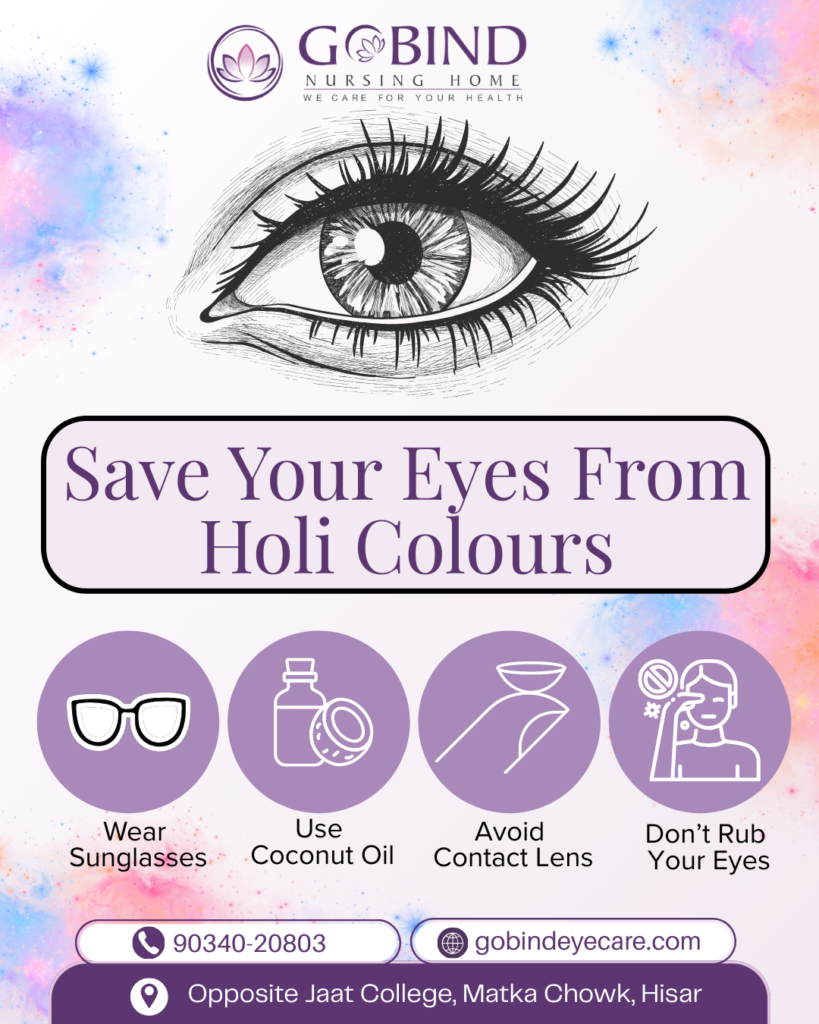
This cannot be stressed enough — do not rub your eyes no matter how intense the irritation feels. Rubbing aggravates inflammation, breaks the protective tear film, and can introduce bacteria from your hands into your eyes. If the irritation feels unbearable, blink rapidly to stimulate natural tear flow, which helps wash out foreign particles.
Post-Holi Eye Care Routine: Day-by-Day Recovery Tips
Once the initial first aid is done, maintaining a consistent eye care routine over the next few days is essential for full recovery.
Use Lubricating Eye Drops
Preservative-free artificial tear drops (lubricating eye drops) help soothe dry, irritated eyes and wash away residual colour particles. These are available over the counter at most pharmacies. However, it is always best to consult an eye specialist before using medicated eye drops, as incorrect use can worsen certain conditions.
Apply a Cold Compress for Swelling
If your eyes are swollen or puffy after Holi, a cold compress can provide quick relief. Wrap a few ice cubes in a clean cloth and gently press it over your closed eyes for 5–10 minutes. Repeat 2–3 times a day. This reduces inflammation and soothes the delicate tissue around your eyes.
Rest Your Eyes and Limit Screen Time
After exposure to harsh chemicals, your eyes need rest to recover. Limit screen time on phones, tablets, and computers for at least 24–48 hours. Ensure your room is well lit when you do use screens, and follow the 20-20-20 rule: every 20 minutes, look at something 20 feet away for 20 seconds.
Stay Hydrated and Eat Eye-Friendly Foods
Good nutrition supports faster eye recovery. Drink plenty of water and include foods rich in Vitamin A (carrots, sweet potatoes), Vitamin C (oranges, amla), Omega-3 fatty acids (flaxseeds, walnuts), and antioxidants (leafy greens, blueberries) in your diet. These nutrients support the natural healing process of your eyes.
Warning Signs: When to Visit an Eye Specialist
Mild redness or irritation usually subsides within 24–48 hours with basic home care. However, certain symptoms indicate that you need to see an eye specialist immediately. Visit Gobind Eye Care Centre if you notice:
- Persistent redness or pain lasting more than 48 hours
- Blurred vision or sudden changes in vision
- Excessive watering or thick discharge from the eyes
- Sensitivity to light (photophobia)
- Swelling that does not reduce after 24 hours
- A feeling of something stuck in the eye that does not go away after rinsing
- Visible colour or dark staining on the white of the eye
Ignoring these symptoms can lead to serious complications including corneal ulcers, chronic dry eye syndrome, or even permanent vision loss. At Gobind Eye Care Centre, our eye care specialists are equipped with state-of-the-art diagnostic tools to assess and treat all post-Holi eye conditions quickly and effectively.
Preventive Eye Care for Holi: Tips from Our Eye Care Centre
Prevention is always better than cure. Here is how you can protect your eyes during next year’s celebrations:
- Wear wraparound sunglasses or protective goggles before stepping out to play Holi.
- Apply a generous coat of coconut oil or petroleum jelly on the face to create a barrier that prevents colour from sticking.
- Choose organic, plant-based colours that are free from heavy metals and synthetic dyes.
- Avoid using water guns or balloons aimed at the face, especially near the eyes.
- If colour does get into your eyes, resist the urge to rub and head indoors immediately to rinse with clean water.
- Wear glasses instead of contact lenses on Holi day.
Why Choose Gobind Eye Care Centre for Your Eye Health?
At Gobind Eye Care Centre, we are committed to providing the highest quality eye care services to patients of all ages. Our team of experienced eye specialists uses advanced diagnostic equipment and evidence-based treatment protocols to address everything from routine eye check-ups to complex eye surgeries.
We understand that your vision is your most precious sense. That is why our eye care centre offers comprehensive services including:
- Complete eye examinations and vision testing
- Treatment of eye infections, allergies, and chemical injuries
- Cataract surgery and refractive procedures
- Diabetic eye care and retina services
- Paediatric eye care for children
- Emergency eye care services
Whether you are dealing with post-Holi eye irritation or simply looking for a trusted eye care centre for your annual eye check-up, Gobind Eye Care Centre is here to help. Schedule an appointment with our eye specialist today and take the first step toward lifelong healthy vision.
Final Thoughts: Celebrate Holi Safely, Protect Your Vision
Holi is one of the most joyful festivals in India, and no one should have to miss out on the fun due to eye problems. By following a simple yet effective post-Holi eye care routine — rinsing your eyes promptly, using lubricating drops, resting your eyes, and visiting an eye specialist at the first sign of serious symptoms — you can protect your vision and enjoy the festival to the fullest.
Remember, your eyes deserve the same care and attention as the rest of your body. Trust the experts at Gobind Eye Care Centre to keep your vision sharp, healthy, and vibrant — not just after Holi, but every day of the year.
Also Read