

Cataract surgery is one of the most successful and commonly performed eye procedures worldwide. A key component of this surgery is the implantation of an Intraocular Lens (IOL), which replaces the eye’s cloudy natural lens. Choosing the right IOL plays a major role in determining visual clarity and overall quality of life after surgery. With guidance from an experienced eye surgeon at a trusted eye hospital, patients can achieve excellent visual outcomes.
At Gobind Eye Care, under the expert care of Dr. Ripan Kaur Kamra, patients are offered advanced IOL options tailored to their lifestyle and vision needs. This article explains the types of IOLs, their benefits, and how to choose the right one.
What Is an Intraocular Lens (IOL)?
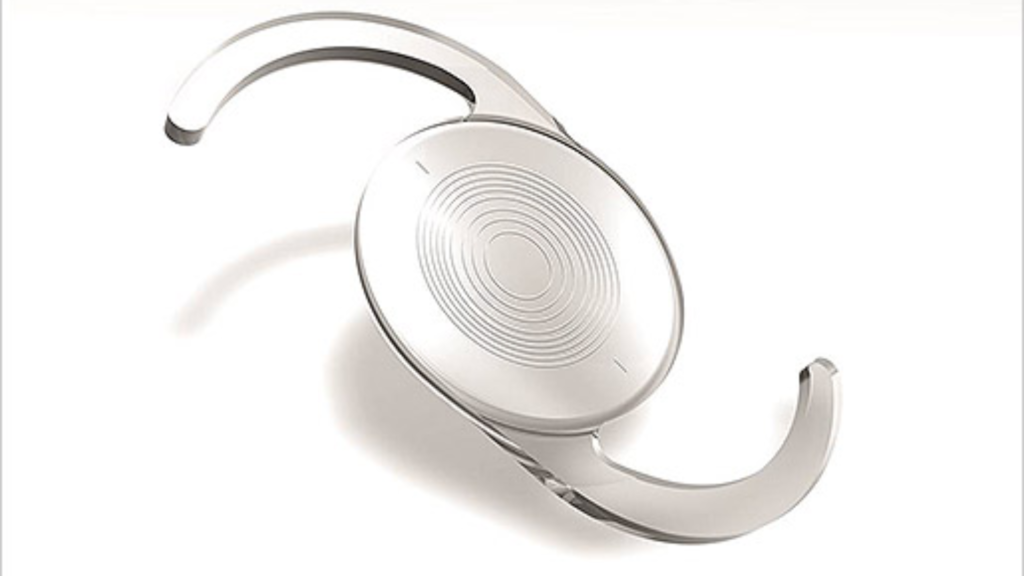
An Intraocular Lens is a small, artificial lens implanted in the eye during cataract surgery after the cloudy natural lens is removed. Modern IOLs are made of high-quality biocompatible materials and are designed to last a lifetime. The right IOL can significantly reduce dependence on glasses and improve vision at various distances.
A skilled eye surgeon evaluates multiple factors—eye health, daily activities, and visual expectations—before recommending the most suitable lens.
Why Choosing the Right IOL Matters
Not all IOLs are the same. Different lenses serve different visual purposes, such as clear distance vision, near vision, or a combination of both. Selecting the correct IOL at a reputed eye hospital ensures:
- Better visual clarity
- Reduced dependence on spectacles
- Improved contrast and night vision
- Higher patient satisfaction
This is why consulting a specialist like Dr. Ripan Kaur Kamra at Gobind Eye Care, regarded by many as a beat eye hospital for advanced cataract care, is crucial.
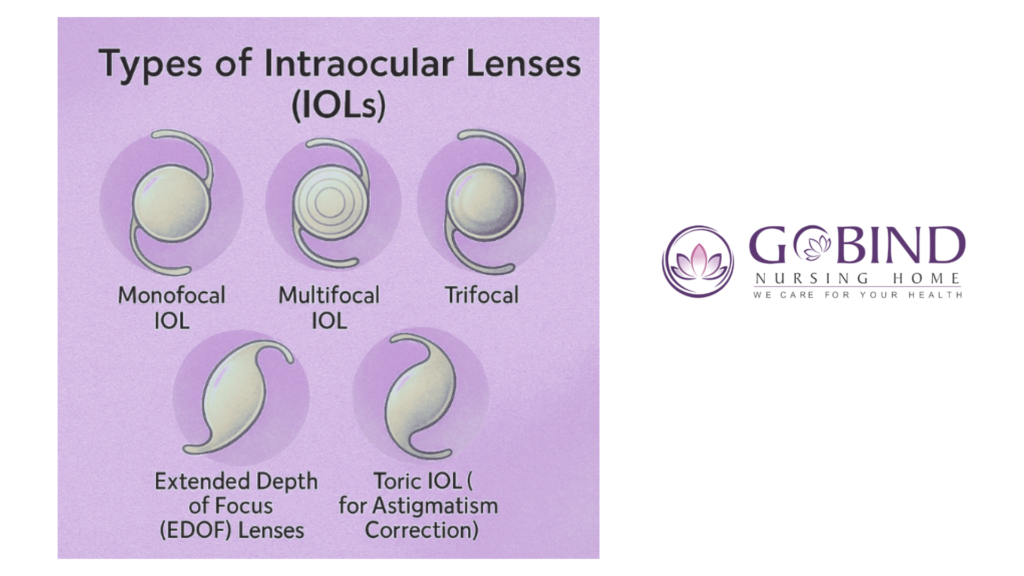
Types of IOLs
1. Monofocal IOLs
Monofocal IOLs are the most commonly used lenses in cataract surgery. They are designed to provide clear vision at one fixed distance—usually far.
Advantages:
- Sharp distance vision
- High image quality
- Cost-effective
- Widely recommended by eye surgeons
Limitations:
- Glasses may be needed for reading or near tasks
Monofocal IOLs are ideal for patients who are comfortable wearing spectacles for near vision.
2. Multifocal IOLs
Multifocal IOLs are advanced lenses that allow vision at multiple distances—near, intermediate, and far.
Advantages:
- Reduced dependence on glasses
- Convenient for daily activities like reading and using mobile phones
Limitations:
- Possible glare or halos at night
- Not suitable for all eyes
At a specialized eye hospital, detailed pre-surgery evaluation is essential before choosing multifocal IOLs.
3. Trifocal IOLs
Trifocal IOLs are an advanced form of multifocal lenses that provide clear vision at three distances: near, intermediate, and far.
Advantages:
- Excellent range of vision
- Ideal for modern lifestyles (screens, driving, reading)
Limitations:
- Higher cost
- Requires precise surgery by an experienced eye surgeon
Patients seeking maximum freedom from glasses often benefit from trifocal IOLs when implanted at centers like Gobind Eye Care.
4. Extended Depth of Focus (EDOF) IOLs
EDOF IOLs provide a continuous range of vision, particularly enhancing distance and intermediate vision with fewer visual disturbances.
Advantages:
- Minimal glare and halos
- Better night vision than multifocal lenses
- Suitable for active individuals
Limitations:
- Near vision may still require reading glasses
EDOF lenses are becoming a popular choice at advanced eye hospitals for patients prioritizing comfort and clarity.
5. Toric IOLs
Toric IOLs are specially designed for patients with astigmatism, a condition where the cornea is irregularly shaped.
Advantages:
- Corrects astigmatism
- Sharper, clearer vision
- Reduces need for cylindrical glasses
Limitations:
- Requires precise alignment during surgery
An experienced eye surgeon like Dr. Ripan Kaur Kamra ensures accurate placement for optimal results.
6. Aspheric IOLs
Aspheric IOLs are designed to improve contrast sensitivity and reduce visual distortions.
Advantages:
- Better night vision
- Improved contrast
- More natural image quality
These lenses are often preferred for patients who drive frequently or need high-quality vision in low-light conditions.
How to Choose the Right IOL
Choosing the right IOL depends on several factors:
- Age and lifestyle
- Reading and screen usage
- Presence of astigmatism
- Night driving requirements
- Budget and expectations
A thorough consultation at a reputed eye hospital helps match the patient’s needs with the appropriate lens technology.
Importance of an Experienced Eye Surgeon
Even the most advanced IOL performs best when implanted by a skilled eye surgeon. Precision, technology, and post-operative care all contribute to successful outcomes.
At Gobind Eye Care, Dr. Ripan Kaur Kamra combines clinical expertise with modern surgical techniques to deliver safe, personalized cataract care. This commitment has earned the center recognition as a best eye hospital choice for many patients.
Life After IOL Implantation
Most patients experience significant visual improvement within days after surgery. Regular follow-ups ensure proper healing and long-term eye health. With the right IOL, patients can enjoy clearer vision, improved confidence, and a better quality of life.
Conclusion
Understanding the types of IOLs empowers patients to make informed decisions about their cataract surgery. From monofocal to trifocal and toric lenses, each option offers unique benefits. Consulting an experienced eye surgeon at a trusted eye hospital like Gobind Eye Care ensures the best possible visual outcome.
If you are considering cataract surgery, consult Dr. Ripan Kaur Kamra to explore the most suitable IOL option for your eyes and lifestyle.
Also Read
Medications in Glaucoma