
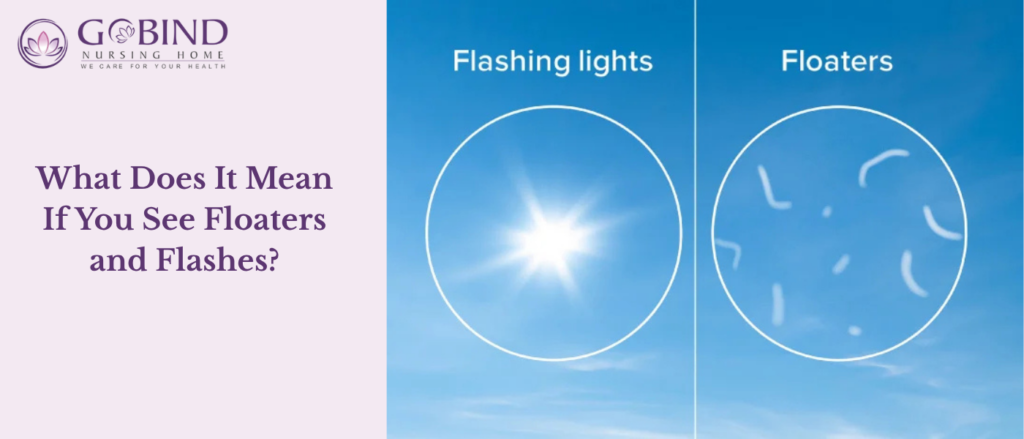
Have you ever noticed tiny black dots, cobweb-like strands, or brief flashes of light floating across your vision? If yes, you’re not alone. Many people experience floaters and flashes at some point in their lives. While these symptoms are often harmless and part of the natural aging process, they can sometimes indicate a serious eye condition that requires immediate eye treatment.
Ignoring sudden changes in your vision could put your eyesight at risk. That’s why understanding what floaters and flashes are, why they happen, and when you should visit an eye doctor is essential for protecting your vision.
What Are Eye Floaters?
Eye floaters are tiny shapes that appear to drift across your field of vision. They may look like:
- Small black or gray dots
- Thread-like strands
- Cobwebs
- Transparent circles
- Squiggly lines
They often become more noticeable when looking at a bright background such as:
- A clear blue sky
- A white wall
- A computer screen
- A blank sheet of paper
Although they seem to move in front of your eyes, floaters are actually tiny clumps inside the gel-like substance (vitreous) that fills the inside of the eye.
As your eyes move, these particles drift, creating shadows on the retina, which is why you see them floating.
What Are Eye Flashes?
Eye flashes are sudden bursts or streaks of light that appear even when no external light source is present.
People often describe them as:
- Lightning streaks
- Camera flashes
- Sparkles
- Flickering lights
- Bright arcs in the corner of vision
Flashes usually occur because the vitreous gel pulls on the retina, stimulating it and creating the sensation of light.
Occasional flashes may not always indicate a serious issue, but frequent or sudden flashes should never be ignored.
Why Do Floaters and Flashes Occur?
There are several reasons why someone may experience floaters and flashes.
1. Natural Aging
As people age, the vitreous gel inside the eye gradually becomes thinner and more liquid.
This causes tiny collagen fibers to clump together, creating floaters.
This is the most common reason and usually affects people over the age of 50.
2. Posterior Vitreous Detachment (PVD)
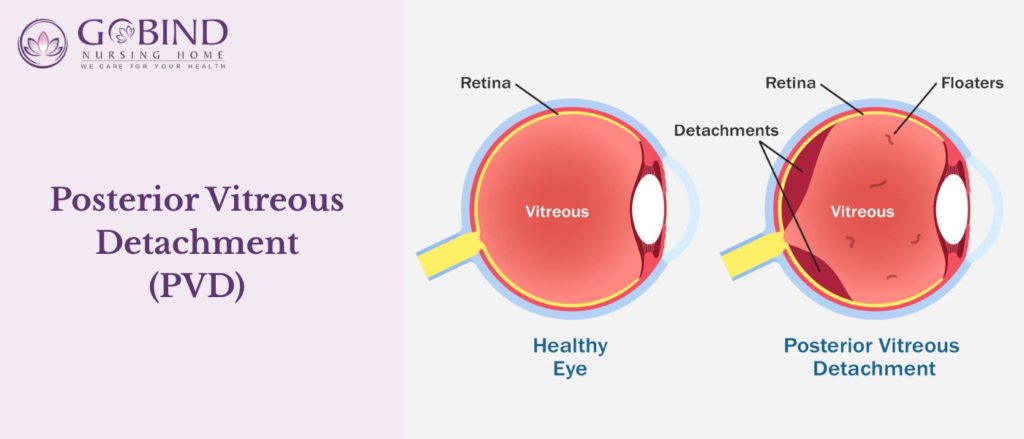
One of the most common causes of flashes is Posterior Vitreous Detachment.
In this condition:
- The vitreous gel separates from the retina.
- Small flashes may appear.
- New floaters develop.
PVD is common with aging and often does not require eye surgery, but it should always be evaluated by an eye doctor because it can sometimes lead to retinal tears.
3. Retinal Tear
Sometimes, when the vitreous pulls away, it can create a tear in the retina.
Symptoms include:
- Sudden increase in floaters
- Bright flashes of light
- Blurred vision
- A shadow or curtain over vision
A retinal tear is a Medical emergency and requires immediate eye treatment to prevent retinal detachment.
4. Retinal Detachment
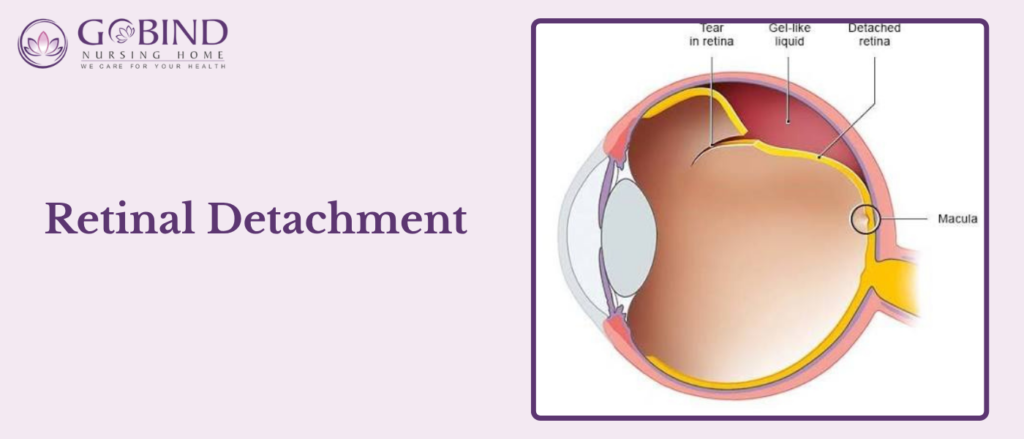
Retinal detachment occurs when the retina separates from the back of the eye.
Without prompt eye surgery, permanent vision loss can occur.
Common symptoms include:
- Numerous new floaters
- Persistent flashes
- Loss of side vision
- Dark curtain across vision
- Sudden decrease in eyesight
Immediate medical attention is critical.
5. Eye Injury
A blow or injury to the eye can cause:
- Floaters
- Flashes
- Bleeding inside the eye
- Retinal damage
Even if symptoms seem mild, a complete eye care evaluation is recommended.
6. Severe Nearsightedness (High Myopia)
People with high myopia have a greater risk of:
- Vitreous changes
- Retinal tears
- Retinal detachment
Routine eye examinations help detect problems early.
7. Eye Inflammation
Inflammation inside the eye, known as uveitis, may cause:
- Floaters
- Eye pain
- Redness
- Light sensitivity
- Blurred vision
Early diagnosis and proper eye treatment can reduce complications.
Conclusion
Seeing a few floaters occasionally is often a normal part of aging, but a sudden increase in floaters, flashes of light, or changes in vision should never be ignored. These symptoms can sometimes be the first warning signs of retinal tears or retinal detachment, both of which require immediate medical attention.
Seeking timely eye treatment from an experienced eye doctor can make the difference between preserving and losing vision. At Gobind Nursing Home, patients receive comprehensive eye care, advanced diagnostic evaluations, and modern eye surgery options when needed. If you notice new floaters, persistent flashes, or any sudden changes in your eyesight, schedule an eye examination without delay. Early diagnosis remains one of the most effective ways to protect your vision for years to come.