
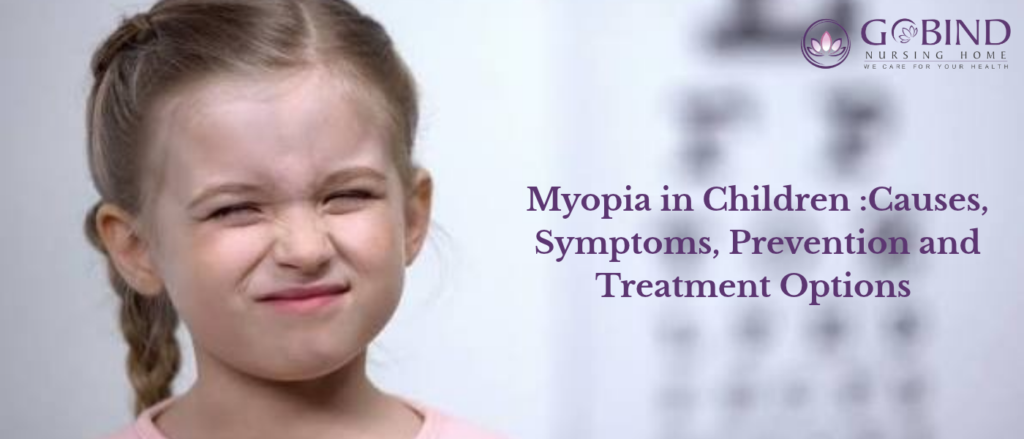
Myopia in children, commonly known as short-sightedness, is becoming increasingly common. A child with myopia can see nearby objects clearly but may struggle to see things that are far away, such as classroom boards, road signs, or television screens. If left unrecognized or poorly managed, myopia can affect a child’s learning, confidence, sports activities, and overall quality of life.
With regular eye care, early vision screening, and timely eye treatment, childhood myopia can often be identified and managed effectively. Parents should understand the causes, warning signs, and available treatment options so that their child can maintain healthy vision as they grow.
What Is Myopia in Children?
Myopia occurs when the eye is longer than normal from front to back, or when the cornea or lens bends light too strongly. Instead of focusing directly on the retina, light focuses in front of it. This makes distant objects appear blurry.
Myopia can develop during childhood and may gradually increase as the eyes continue to grow. Some children may develop mild myopia, while others can experience a faster progression that requires closer monitoring by an eye doctor.
Childhood myopia should not be considered simply a need for stronger glasses. In some cases, progressive myopia can increase the risk of certain eye problems later in life, making early management important.
Common Signs of Myopia in Children
Children may not always realize that their vision is blurry. Younger children may also have difficulty explaining what they are experiencing. Parents, teachers, and caregivers should watch for changes in visual behavior.
Common signs include:
- Squinting to see distant objects
- Sitting very close to the television or computer
- Holding books or mobile devices unusually close
- Difficulty reading the classroom board
- Frequent headaches or eye discomfort
- Closing one eye when looking at distant objects
- Difficulty recognizing people or objects from a distance
- Reduced interest in outdoor or sports activities
- Frequently rubbing the eyes
- Complaints that distant objects look blurry
If these signs appear regularly, parents should schedule a comprehensive eye examination with an eye doctor rather than assuming the problem will resolve on its own.
Causes of Myopia in Children
Childhood myopia usually develops because of a combination of genetic, environmental, and lifestyle factors.
1. Family History
Genetics can play an important role. A child is more likely to develop myopia if one or both parents have myopia.
However, having parents with myopia does not mean that a child will definitely develop it. Environmental and lifestyle factors can also influence how the condition progresses.
2. Excessive Near Work
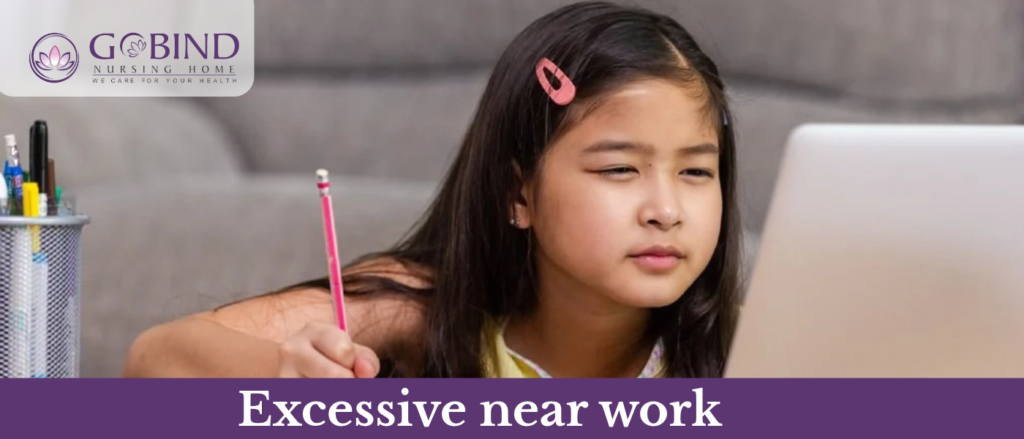
Children today spend considerable time focusing on nearby objects, including:
- Smartphones
- Tablets
- Computers
- Books
- Gaming devices
- Homework and other close-up activities
Long periods of uninterrupted near work may contribute to myopia development or progression in susceptible children.
3. Limited Outdoor Time
Spending time outdoors is considered an important part of healthy childhood vision habits. Natural outdoor light and looking at objects at different distances may help reduce the risk of developing myopia.
Encouraging children to spend regular time outdoors can therefore be a useful part of an overall eye care routine.
4. Rapid Eye Growth
During childhood, the eyes naturally grow. In some children, the eyeball becomes elongated more than expected. This can cause light to focus in front of the retina and result in myopia.
This is one reason why myopia may increase during school years and why regular eye examinations are important.
5. Poor Visual Habits
Poor lighting, incorrect reading distance, prolonged screen use without breaks, and spending too much time on close-up tasks may contribute to visual strain. These habits may not be the only cause of myopia, but improving them can support better overall eye health.
How Is Myopia Diagnosed?
A comprehensive eye examination is the best way to identify myopia.
An eye doctor may perform several tests depending on the child’s age and symptoms. These may include:
- Visual acuity testing – Checks how clearly the child can see at different distances.
- Refraction testing – Determines the appropriate lens power.
- Eye health examination – Checks the overall health of the eyes.
- Retinal examination – Allows the doctor to examine the retina and other internal structures.
- Cycloplegic refraction – In children, special eye drops may sometimes be used to temporarily relax focusing muscles and obtain a more accurate measurement.
Regular examinations are particularly important when myopia is already present or when there is a strong family history.
Treatment Options for Myopia in Children
The appropriate eye treatment depends on the child’s age, prescription, rate of myopia progression, eye health, and individual needs.
1. Prescription Glasses
Glasses are one of the most common and effective ways to correct childhood myopia. They help focus light correctly on the retina, allowing the child to see distant objects clearly.
Children should wear their prescribed glasses according to their eye doctor’s recommendations. Parents should also ensure that the prescription is reviewed periodically because children’s vision can change as they grow.
2. Contact Lenses
In selected older children and teenagers, contact lenses may be considered. Certain specialized contact lenses may also be used as part of myopia-management strategies.
Because contact lenses require proper hygiene and responsible handling, they should only be used under professional guidance.
3. Myopia-Control Glasses
Some specially designed glasses can help slow the progression of myopia in appropriate patients. These lenses work differently from standard corrective lenses and are prescribed based on the child’s specific condition.
4. Low-Dose Atropine
In some children with progressive myopia, an eye doctor may recommend low-dose atropine eye drops. Research has shown that appropriately prescribed low-dose atropine can help slow myopia progression in many children.
The concentration, duration, and suitability of treatment should always be determined by an eye-care professional. Parents should never use atropine or other prescription eye drops without medical guidance.
Can Childhood Myopia Be Prevented?
Not every case of myopia can be prevented, particularly when genetics play a strong role. However, healthy visual habits may help reduce the risk of developing or rapidly progressing myopia.
Parents can encourage children to:
- Spend more time outdoors each day.
- Take regular breaks during prolonged near work.
- Follow the 20-20-20 rule: every 20 minutes, look at something about 20 feet away for at least 20 seconds.
- Maintain a comfortable reading distance.
- Use adequate lighting while studying.
- Avoid holding screens extremely close to the face.
- Attend regular eye examinations.
These habits are useful for general eye care, although they should not replace professional assessment when a child has symptoms or an existing prescription.
Is Eye Surgery Needed for Myopia in Children?
Generally, eye surgery such as LASIK is not the standard treatment for childhood myopia. Children’s eyes are still developing, and their prescription can continue to change.
Refractive surgery is generally considered only when the eyes have matured and the prescription has remained stable, subject to an individual’s suitability and professional assessment.
Therefore, parents should not rush toward eye surgery when a child develops myopia. The focus during childhood is usually on providing clear vision and, where appropriate, slowing myopia progression.
Final Thoughts
Myopia in children is common, but it should not be ignored. Early identification, regular eye examinations, healthy visual habits, outdoor activity, and appropriate myopia management can help children maintain clearer vision and potentially reduce the progression of the condition.
If your child frequently squints, sits close to screens, struggles to see the classroom board, or complains of blurry distance vision, schedule an eye examination with an eye doctor. Early eye treatment and consistent eye care are much better than waiting until poor vision begins affecting everyday life.
For children, the goal is not simply to provide stronger glasses—it is to understand why myopia is developing, monitor how the eyes are changing, and choose the right management approach at the right time. Eye surgery is generally not required during childhood, and most children can be effectively managed through appropriate non-surgical options and regular professional monitoring.