
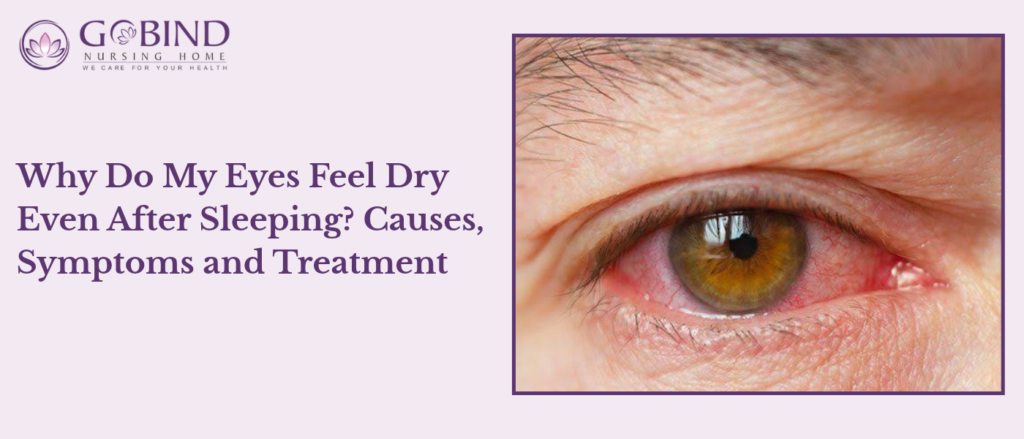
Waking up with dry, irritated, or uncomfortable eyes can be frustrating. You may expect your eyes to feel refreshed after a full night of sleep, but sometimes the opposite happens. If you are wondering, “Why do my eyes feel dry even after sleeping?”, several factors may be responsible.
Dry eyes in the morning can be caused by poor tear production, sleeping with partially open eyes, dry air, screen use, eyelid problems, or an underlying eye condition. Understanding the cause is important because ongoing dryness can affect comfort and, in some cases, the health of the eye surface.
With proper eye care, timely eye treatment, and guidance from an experienced eye doctor, most causes of morning eye dryness can be managed effectively.
What Causes Dry Eyes in the Morning?
Your eyes need a healthy tear film to stay smooth, comfortable, and protected. Tears are not simply water. A healthy tear film contains different components that help lubricate the eye, prevent evaporation, and protect the surface from irritation.
When this tear film becomes unstable, your eyes may feel dry, gritty, burning, or uncomfortable. Even though you have been sleeping for several hours, dryness can still develop during the night.
1. Sleeping With Your Eyes Partially Open
One common reason why your eyes feel dry even after sleeping is nocturnal lagophthalmos, a condition in which the eyelids do not close completely during sleep.
When the eyes remain partially exposed, tears can evaporate throughout the night. This may cause symptoms such as:
- Dryness immediately after waking up
- Red or irritated eyes
- A burning sensation
- A gritty or sandy feeling
- Sensitivity to light
- Blurred vision that improves after blinking
If you regularly wake up with severe dryness or one eye feels significantly drier than the other, an eye doctor can examine whether incomplete eyelid closure is the cause.
2. Dry Bedroom Air
The environment in your bedroom can have a major effect on your eyes. Air conditioning, heaters, ceiling fans, and low humidity can increase tear evaporation while you sleep.
This is especially common when air flows directly toward your face.
You can try:
- Avoiding direct airflow toward your eyes
- Maintaining comfortable humidity in the bedroom
- Keeping the room free from excessive smoke or dust
- Discussing suitable lubricating eye drops with an eye doctor
Simple environmental changes can support better eye care and reduce dryness after waking.
3. Meibomian Gland Dysfunction
The eyelids contain tiny oil-producing glands called meibomian glands. The oil produced by these glands helps slow down tear evaporation.
When these glands become blocked or do not function properly, the tears may evaporate too quickly. This is known as evaporative dry eye.
Common symptoms include:
- Morning dryness
- Burning or stinging
- Watery eyes
- Fluctuating vision
- Eyelid irritation
- Dryness that worsens throughout the day
An eye examination can help identify problems with the eyelids and tear glands. Depending on the cause, your eye treatment plan may include warm compresses, eyelid hygiene, lubricating drops, or other treatments recommended by your eye doctor.
4. Using Screens Late at Night
Mobile phones, computers, and other digital screens can contribute to dry eyes. When concentrating on a screen, people tend to blink less frequently and sometimes blink incompletely.
Although the screen itself is not the only cause of morning dryness, prolonged screen use before bedtime can worsen an existing dry eye problem.
Try to:
- Reduce unnecessary screen time before sleeping
- Take regular breaks during long periods of computer use
- Blink consciously while using digital devices
- Maintain a comfortable distance from screens
Good digital habits are an important part of daily eye care.
5. Poor Tear Production
Some people naturally produce fewer tears than needed to keep the eyes properly lubricated. Tear production may also decrease with age.
Reduced tear production can lead to dryness during both the day and night. Your eyes may feel:
- Dry and uncomfortable
- Scratchy
- Tired
- Red
- Sensitive to light
You may even experience excessive tearing. This sounds unusual, but irritation from dry eyes can sometimes trigger reflex tearing.
A detailed eye examination can help determine whether reduced tear production is responsible and whether specific eye treatment is required.
6. Eyelid Inflammation
Inflammation along the edges of the eyelids, commonly called blepharitis, can also contribute to dry eyes after sleeping.
It may cause:
- Crusting around the eyelashes
- Red or swollen eyelids
- Burning eyes
- A foreign-body sensation
- Watery or dry eyes
Keeping the eyelids clean can be helpful, but persistent symptoms should be checked by an eye doctor. The right diagnosis is important because not every type of eyelid irritation requires the same treatment.
7. Contact Lens Use
Contact lens wearers may experience dry eyes, particularly if lenses are worn for long periods or the eyes are already prone to dryness.
If you wake up with dryness after removing your lenses before bedtime, the lens itself may not be the only issue. Your eye surface, tear quality, or contact lens fit may need to be evaluated.
Never continue using lenses through significant pain, redness, or blurred vision without seeking professional advice.
Why Do My Eyes Feel Dry Even After Sleeping for 8 Hours?
Getting enough sleep is important, but the number of hours you sleep does not automatically guarantee healthy eye lubrication.
Your eyes can still feel dry after eight hours because:
- Your eyelids may not close completely.
- Bedroom air may be too dry.
- Your tears may evaporate too quickly.
- The oil glands in your eyelids may not be functioning properly.
- You may already have dry eye disease.
- Certain medications or health factors may affect tear production.
- Late-night screen use may worsen eye surface irritation.
Therefore, the solution is not always simply getting more sleep. Identifying the underlying cause is the key to effective eye treatment.
How Can You Relieve Dry Eyes in the Morning?
Mild occasional dryness can often improve with simple changes.
Helpful Eye Care Tips
- Keep direct fan or air-conditioner airflow away from your face.
- Take breaks from screens, especially before bedtime.
- Stay adequately hydrated.
- Maintain regular eyelid hygiene.
- Use only eye drops recommended for your specific condition.
- Follow the correct instructions if you wear contact lenses.
- Avoid rubbing your eyes, especially when they are irritated.
- Get regular eye examinations.
It is important to remember that redness-relieving drops and lubricating drops are not always the same. Using the wrong product repeatedly may not address the actual cause of your symptoms.
When Should You Visit an Eye Doctor?
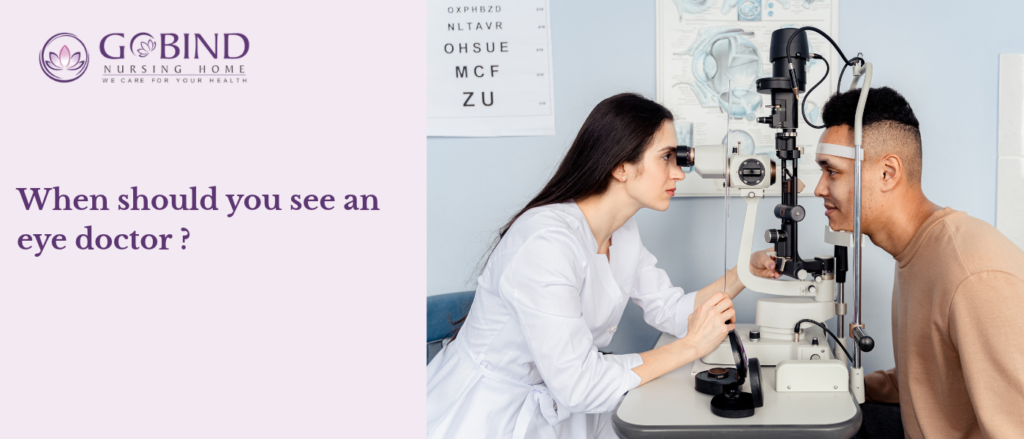
Occasional mild dryness may not always be serious. However, you should schedule an eye examination if your symptoms are persistent or worsening.
Seek professional eye care if you experience:
- Dry eyes every morning
- Persistent redness
- Pain or severe discomfort
- Sudden blurred vision
- Light sensitivity
- Excessive watering with irritation
- Eye discharge
- A sensation that something is constantly stuck in the eye
- Symptoms affecting your daily activities
Early evaluation can help identify dry eye disease, eyelid problems, corneal surface changes, or other conditions requiring specialized eye treatment.
At Gobind Nursing Home, an experienced eye doctor can evaluate your symptoms and recommend appropriate eye care based on your individual condition. The treatment may range from lifestyle guidance and lubricating therapy to management of underlying eyelid or eye surface conditions.
In some cases, specialized procedures or eye surgery may be considered for specific eye conditions. However, dry eyes do not automatically mean that surgery is required. The best treatment depends entirely on the underlying cause.
Can Dry Eyes Damage Your Vision?
Mild dry eye symptoms are often manageable, but long-term untreated dryness can affect the eye surface. In severe cases, persistent inflammation and poor lubrication may lead to damage to the cornea, the clear front surface of the eye.
This is why regular symptoms should not be ignored. Early eye treatment can help improve comfort, protect the eye surface, and maintain clear vision.
Final Thoughts
If you often wake up asking, “Why do my eyes feel dry even after sleeping?”, your eyes may be experiencing more than simple tiredness. Incomplete eyelid closure, poor tear quality, dry bedroom air, eyelid gland problems, and existing dry eye disease can all contribute to morning discomfort.
Good daily eye care can help, but persistent symptoms should be evaluated by an experienced eye doctor. Getting the right diagnosis is essential for choosing the most effective eye treatment.
At Gobind Nursing Home, professional eye evaluation can help identify the cause of your dry eye symptoms and provide appropriate guidance. Whether your condition requires simple lifestyle changes, medical treatment, or specialized care, timely attention can help keep your eyes comfortable and healthy.
Your eyes deserve care even while you sleep. If morning dryness has become a regular problem, do not ignore it—schedule an eye examination and protect your vision.