
Cataract surgery is one of the most commonly performed and successful eye surgery procedures. If you or someone in your family is planning cataract treatment, one of the first questions you may have is: How long does cataract surgery recovery take?
The good news is that most people notice an improvement in their vision within a few days, and many are able to return to normal daily activities relatively quickly. However, complete recovery can take several weeks, depending on the condition of the eye, the type of procedure performed, and how well the patient follows aftercare instructions.
At Gobind Nursing Home, professional eye care focuses not only on the surgery itself but also on proper recovery and follow-up. Understanding what to expect after cataract surgery can help you feel more confident and prepared for a smooth healing process.
What Is Cataract Surgery?
A cataract occurs when the natural lens of the eye becomes cloudy. This cloudiness can gradually affect vision and make daily activities such as reading, driving, watching television, or recognizing faces more difficult.
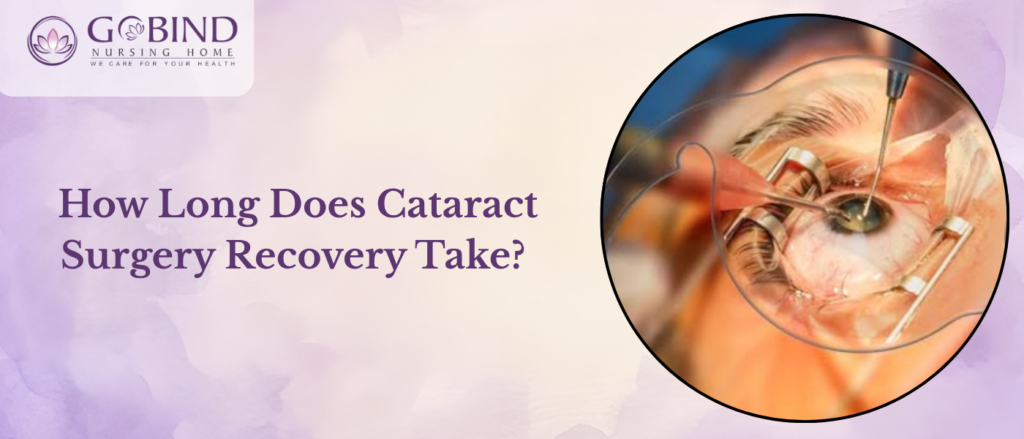
During cataract eye surgery, the cloudy natural lens is removed and usually replaced with a clear artificial lens called an intraocular lens (IOL). Modern cataract surgery is generally a short and safe procedure performed using advanced techniques.
However, the success of the procedure also depends on proper recovery. Following the advice of your eye doctor and attending scheduled follow-up visits are important parts of effective eye treatment.
How Long Does Cataract Surgery Recovery Take?
For most people, initial recovery after cataract surgery takes about one to two weeks, while complete healing may take approximately four to eight weeks. Recovery time can vary from person to person.
Many patients experience the following timeline:
- First 24–48 hours: Mild discomfort and blurry vision may occur.
- First few days: Vision may gradually begin to improve.
- One week: Most patients can comfortably return to many routine activities.
- Four to six weeks: The eye usually heals significantly.
- Up to eight weeks: Complete recovery may take longer in some cases.
Every person’s eyes are different. Patients with diabetes, glaucoma, retinal problems, severe cataracts, or other eye conditions may require additional monitoring and a longer recovery period.
Recovery May Be Different for Each Patient
It is important not to compare your recovery with someone else’s. Some patients experience clearer vision within a day or two, while others may notice gradual improvement over several weeks.
Your eye doctor can provide the most accurate information about your individual recovery based on your eye health and the type of eye surgery performed.
What Happens Immediately After Cataract Surgery?
After cataract surgery, you may experience temporary symptoms as your eye begins to heal. These are usually normal and improve with time.
Common symptoms may include:
- Mild irritation or discomfort
- Slight redness
- Watery eyes
- Blurry or cloudy vision
- Sensitivity to light
- A feeling of something being present in the eye
- Mild itching
Vision may initially seem blurry because the eye needs time to adjust. Some patients also notice that colours appear brighter after surgery because the cloudy cataract has been removed.
Your eye may also be covered with a protective shield immediately after surgery. The medical team will explain when and how to remove it and provide instructions about sleeping and protecting the operated eye.
What Can Affect Cataract Surgery Recovery Time?
Several factors can influence how quickly you recover after cataract eye surgery.
1. Your Overall Eye Health
Patients with other eye conditions may experience a longer or more complicated recovery. Conditions such as glaucoma, diabetic retinopathy, macular degeneration, or corneal problems can affect visual improvement after surgery.
2. The Type of Cataract
Very advanced or dense cataracts may sometimes make surgery more complex, which can influence the healing process.
3. Existing Medical Conditions
Health conditions such as diabetes can affect healing and increase the importance of regular monitoring and proper eye treatment.
4. Following Aftercare Instructions
One of the most important factors in recovery is following the advice of your eye doctor. Skipping eye drops, rubbing the eye, or returning to strenuous activities too early may increase the risk of complications.
5. Individual Healing Response
Each body heals differently. Some patients experience rapid improvement, while others require more time for vision to stabilize.
How to Recover Faster After Cataract Surgery?
While you cannot force the eye to heal faster, you can support healthy recovery by following proper post-operative instructions.
Here are some helpful recovery tips:
- Use eye drops regularly: Follow the prescribed schedule carefully.
- Do not rub your eyes: Rubbing can irritate the healing eye.
- Protect your eyes: Wear the recommended eye shield or protective glasses.
- Avoid heavy lifting: Strenuous activity may increase pressure in the eye.
- Keep the eye clean: Avoid getting soap, dust, or contaminated water into the eye.
- Attend follow-up appointments: Regular examinations help ensure that healing is progressing properly.
- Follow medication instructions: Never stop prescribed medicines without medical advice.
- Ask before returning to exercise: Your doctor can advise when specific activities are safe.
Professional eye care does not end after surgery. Proper follow-up is an important part of successful cataract treatment.
What Activities Should You Avoid After Cataract Surgery?
During recovery, certain precautions can help protect your healing eye.
You may need to temporarily avoid:
- Swimming pools and hot tubs
- Contact sports
- Heavy gym workouts
- Heavy lifting
- Rubbing the eye
- Exposure to dust and smoke
- Eye makeup for a period recommended by your doctor
You should also avoid driving until your vision is clear enough and your eye doctor confirms that it is safe.
Always follow your doctor’s specific advice because activity restrictions can differ from patient to patient.
Conclusion:
So, how long does cataract surgery recovery take? Most people notice improvement within a few days, can return to many normal activities within one or two weeks, and achieve more complete healing within approximately four to eight weeks.
The exact recovery period depends on your eye health, the type of eye surgery, your overall medical condition, and how carefully you follow aftercare instructions.
If you experience persistent vision problems or unusual symptoms, consult an experienced eye doctor without delay. Proper eye care, timely follow-up, and appropriate eye treatment can support a safer and smoother recovery.
For professional guidance related to cataracts and other eye conditions, Gobind Nursing Home can provide appropriate consultation and support based on your individual eye health needs. Remember that every patient heals differently, so always follow personalized advice from your eye specialist rather than relying only on a general recovery timeline.