
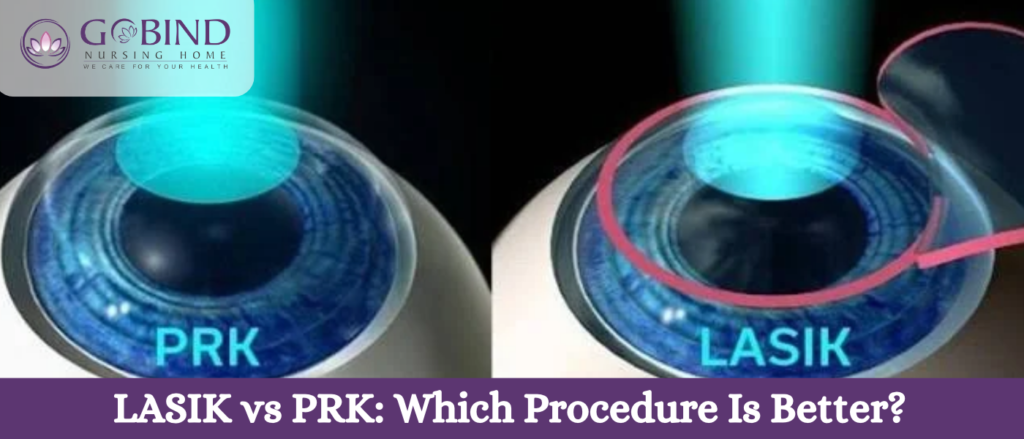
When it comes to improving vision and reducing dependence on glasses or contact lenses, LASIK vs PRK is one of the most common comparisons patients make. Both are advanced laser-based eye surgery procedures designed to correct refractive errors such as myopia, hyperopia, and astigmatism. However, they differ significantly in how the cornea is treated, recovery time, and which patients may be better suited for each procedure.
Choosing between LASIK and PRK is not simply about deciding which surgery is “better.” The right eye treatment depends on factors such as corneal thickness, eye health, lifestyle, prescription, age, and individual healing patterns.
A qualified eye doctor can perform a detailed eye examination and recommend the safest option for your vision and corneal condition.
What Are LASIK and PRK?
LASIK and PRK are both forms of laser vision correction. Their main goal is similar: reshape the cornea so that light entering the eye focuses correctly on the retina.
The major difference is how the surgeon reaches the corneal tissue that needs to be reshaped.
What Is LASIK?
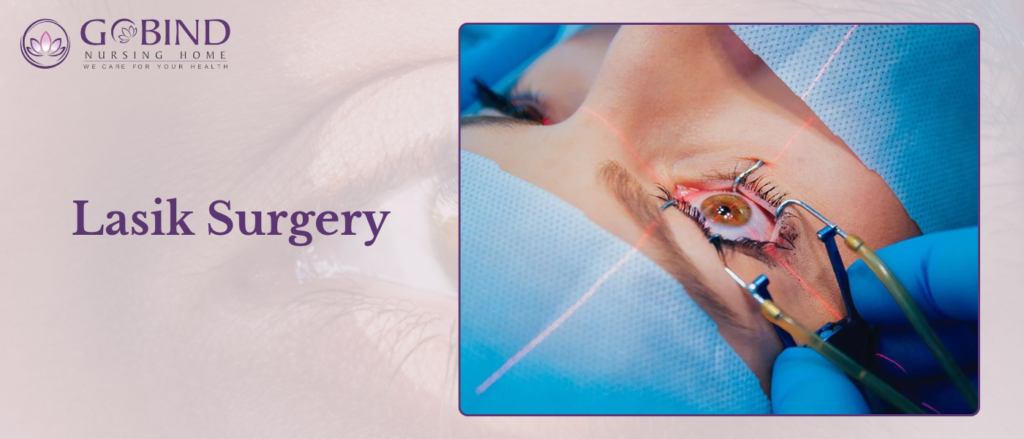
LASIK stands for Laser-Assisted In Situ Keratomileusis. During LASIK, the surgeon creates a thin flap in the cornea. This flap is gently lifted, and an excimer laser reshapes the underlying corneal tissue.
The flap is then placed back into position, where it naturally adheres without requiring stitches.
LASIK is widely preferred because recovery is generally quick, and many patients experience clearer vision within a short period after the procedure.
What Is PRK?
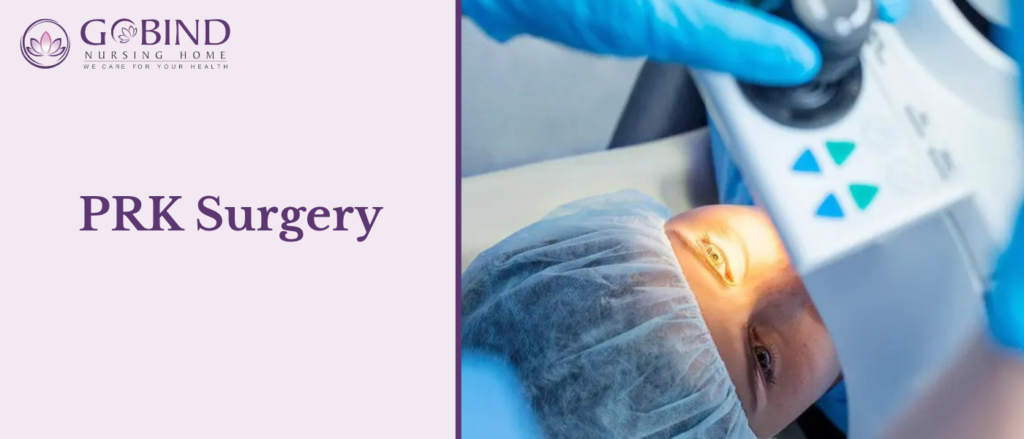
PRK stands for Photorefractive Keratectomy. Unlike LASIK, PRK does not involve creating a corneal flap.
Instead, the thin outer layer of the cornea, called the epithelium, is removed. The excimer laser then reshapes the corneal surface. The epithelial layer gradually grows back during the healing process.
Because PRK involves surface healing, visual recovery usually takes longer than LASIK.
LASIK vs PRK: Key Differences
Understanding the differences can help patients have a more informed discussion with their eye doctor.
| Feature | LASIK | PRK |
| Corneal flap | Yes | No |
| Recovery | Usually faster | Usually slower |
| Initial discomfort | Generally mild | Can be more noticeable |
| Vision improvement | Often rapid | Gradual |
| Suitable for some thin corneas | May not be ideal | May be considered |
| Risk from direct eye trauma | Flap-related considerations | No corneal flap |
| Return to normal activities | Usually sooner | Usually takes longer |
Neither procedure is universally better. The best option depends on your individual eye structure and medical history.
Advantages of LASIK
LASIK has become a popular choice for refractive eye surgery because of its relatively quick recovery.
1. Faster Visual Recovery
Many suitable patients notice a significant improvement in vision soon after LASIK. Vision may continue to stabilize over the following days or weeks.
2. Less Surface Healing
Since LASIK does not require the corneal surface to heal in the same way as PRK, patients typically experience less postoperative surface discomfort.
3. Quick Return to Routine
Patients can often return to many normal activities sooner after LASIK, depending on their surgeon’s instructions and individual healing.
4. Effective Vision Correction
LASIK can correct common refractive errors, including:
- Nearsightedness
- Farsightedness
- Astigmatism
However, candidacy must always be determined through a comprehensive examination.
Advantages of PRK
PRK can be an excellent alternative for patients who may not be ideal candidates for LASIK.
1. No Corneal Flap
One of the biggest differences is that PRK does not create a flap. This can be an important consideration for people involved in activities where significant eye trauma is possible.
2. May Be Suitable for Certain Corneal Conditions
Patients with relatively thin corneas or corneal characteristics that make LASIK less suitable may sometimes be considered for PRK.
3. Long-Term Results
Once the cornea has healed and vision stabilizes, PRK can provide excellent long-term vision correction in appropriately selected patients.
LASIK vs PRK: Which Procedure Is Better?
There is no single procedure that is better for everyone.
LASIK may be preferable for someone who wants faster visual recovery and has suitable corneal thickness and anatomy. PRK may be more appropriate for someone whose corneal structure, lifestyle, or other factors make a flap-based procedure less desirable.
The decision should be based on a complete eye evaluation rather than simply choosing the procedure with the faster recovery.
An experienced eye doctor may evaluate:
- Corneal thickness
- Corneal shape and topography
- Eye pressure
- Tear film and dry-eye symptoms
- Current glasses prescription
- Stability of your prescription
- Overall eye health
- Previous eye conditions or surgeries
- Lifestyle and occupation
Who May Be a Better Candidate for LASIK?
LASIK may be considered when the patient has healthy eyes and sufficient corneal tissue.
A person may potentially be considered for LASIK if:
- Their prescription has remained relatively stable.
- Their corneas are healthy and suitable for flap creation.
- They do not have certain corneal diseases.
- Their overall eye health is good.
- Their expectations are realistic.
However, having a suitable glasses prescription alone does not guarantee LASIK eligibility.
Who May Benefit From PRK?
PRK may be considered when LASIK is not the preferred option.
It may be discussed for patients with:
- Thinner corneas
- Certain corneal shapes
- Higher risk of eye trauma because of their occupation or sports
- Other factors that make a corneal flap less desirable
Again, PRK is not automatically safer or better simply because it does not involve a flap. Proper patient selection is essential for both procedures.
Recovery: LASIK vs PRK
Recovery is one of the most noticeable differences between the two procedures.
LASIK Recovery
LASIK generally has a faster initial recovery. Some patients experience improved vision very soon after surgery, although complete stabilization can take longer.
Patients may experience temporary:
- Dryness
- Mild irritation
- Light sensitivity
- Fluctuating vision
- Halos or glare
Your surgeon will provide specific instructions about eye drops, screen use, exercise, swimming, and other activities.
PRK Recovery
PRK usually requires more patience. Since the surface of the cornea needs to regenerate, discomfort and blurry vision can occur during the early healing period.
Vision typically improves progressively as the cornea heals and continues to stabilize over time.
This does not mean PRK produces inferior results. It simply has a different healing process.
Are LASIK and PRK Safe?
Modern laser vision correction has a strong safety record when performed on appropriately selected patients using proper screening and technology.
However, like any medical procedure, LASIK and PRK can have potential side effects and complications.
These may include:
- Dry eyes
- Glare or halos
- Temporary fluctuations in vision
- Undercorrection or overcorrection
- Infection or inflammation
- Changes in corneal shape
- Need for additional treatment in selected cases
A detailed preoperative assessment is therefore extremely important.
How an Eye Care Specialist Chooses Between LASIK and PRK
The choice should never be based solely on advertisements or the shortest recovery period.
A comprehensive eye care evaluation helps determine which procedure is appropriate.
Your specialist may perform:
- Vision testing – to measure your current prescription.
- Corneal mapping – to examine the shape and surface of the cornea.
- Corneal thickness measurement – to determine whether enough tissue is available.
- Tear-film evaluation – particularly if dry eyes are a concern.
- Detailed eye examination – to identify other eye conditions.
- Medical history review – to identify factors that may affect healing.
Based on these findings, your surgeon can explain the potential benefits and limitations of each option.
Why Choosing the Right Eye Treatment Matters
Laser vision correction is not just about getting rid of glasses. The goal is to achieve good visual outcomes while maintaining the health and structural integrity of the eye.
That is why choosing a qualified eye-care facility and experienced surgeon is important.
If you are considering eye treatment or eye surgery, a consultation at a trusted facility such as Gobind Nursing Home can help you understand your options and determine whether laser vision correction is appropriate for you.
LASIK or PRK: What Should You Choose?
If you want faster initial recovery and your corneas are suitable for a flap-based procedure, LASIK may be a good option.
If you have certain corneal characteristics, participate in activities involving potential eye trauma, or are otherwise not an ideal LASIK candidate, PRK may be considered.
Ultimately, the better procedure is the one that is safer and more appropriate for your individual eyes.
Do not choose LASIK or PRK based only on cost, recovery time, or someone else’s experience. Two people with similar glasses prescriptions can have very different corneal structures and therefore different surgical recommendations.
Final Takeaway
The debate over LASIK vs PRK does not have a universal winner. Both procedures can provide excellent vision correction when the right patient is selected and the procedure is performed appropriately.
LASIK generally offers faster visual recovery, while PRK eliminates the need for a corneal flap and can be a useful option for selected patients. A detailed examination by an experienced eye doctor is the best way to determine which procedure is suitable for you.