
Introduction
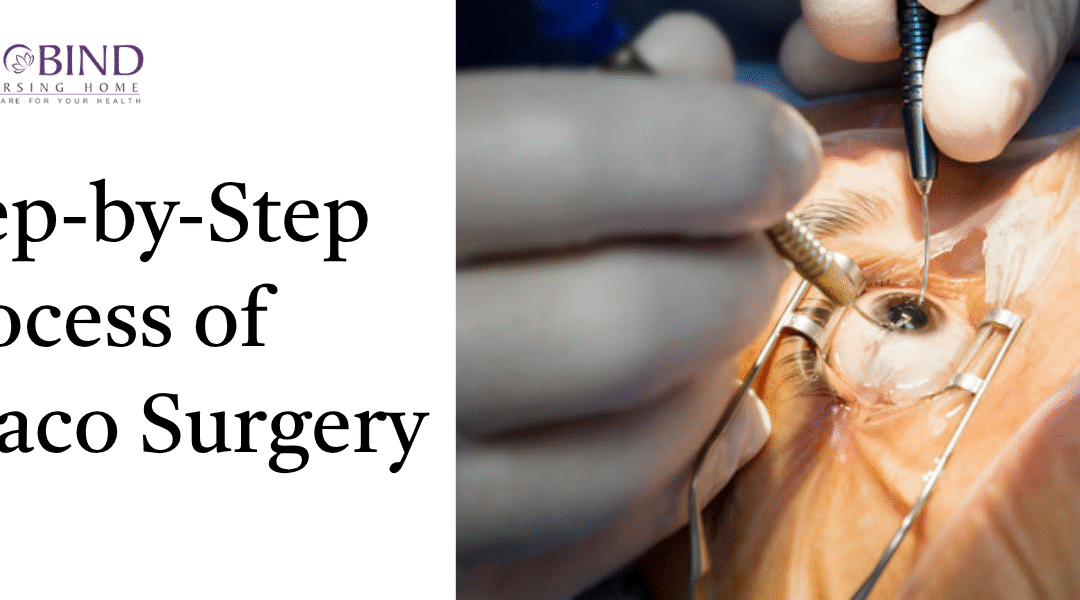
Cataracts are one of the most common causes of vision loss worldwide, particularly among older adults. Fortunately, modern medicine offers a safe and effective solution — phacoemulsification, also called phaco surgery.
Phacoemulsification is a minimally invasive cataract surgery that uses ultrasound energy to remove a cloudy lens and replace it with a clear intraocular lens (IOL). The procedure is quick, painless, and allows for a rapid return to normal activities.
In this guide, we will explain the step-by-step process of phaco surgery in simple terms so you can understand exactly what happens during this life-changing procedure.
Understanding Phacoemulsification
Phacoemulsification involves breaking the cloudy lens into tiny fragments using ultrasound and then removing them from the eye. A foldable artificial lens (IOL) is then inserted through a tiny incision (2–2.8 mm).
This advanced technique replaces older, traditional cataract surgery methods that required large incisions and stitches, making recovery slower and more uncomfortable.
Step 1: Pre-Operative Preparation
Before the surgery begins, several preparatory steps are taken:
- Comprehensive Eye Examination: Your ophthalmologist checks your vision, measures the size and shape of your eye, and assesses cataract severity.
- Medication and Eye Drops: Antibiotic and anti-inflammatory drops may be prescribed to prevent infection.
- Anesthesia: Usually, topical anesthesia (numbing the eye with eye drops) is applied. In some cases, a mild sedative may be given to relax the patient.
- Sterilization: The eye area is cleaned and a sterile cover is placed over the surrounding area.
At this stage, patients are awake but completely comfortable, and there is no pain during the procedure.
Step 2: Making the Micro Incision
The surgeon creates a tiny incision (2.2–2.8 mm) at the edge of the cornea.
- This micro-incision allows access to the lens.
- The incision is so small that it is self-sealing, no stitches are required with speedy recovery.
Step 3: Capsulorhexis (Opening the Lens Capsule)
The lens is enclosed in a thin, clear capsule.
- The surgeon creates a circular opening in the front part of this capsule.
- This step, called capsulorhexis, allows access to the cataract inside while keeping the back capsule intact to hold the artificial lens later.
This step requires precision to ensure the lens remains stable after surgery.
Step 4: Ultrasound Emulsification of the Lens
Here’s the core of phaco surgery:
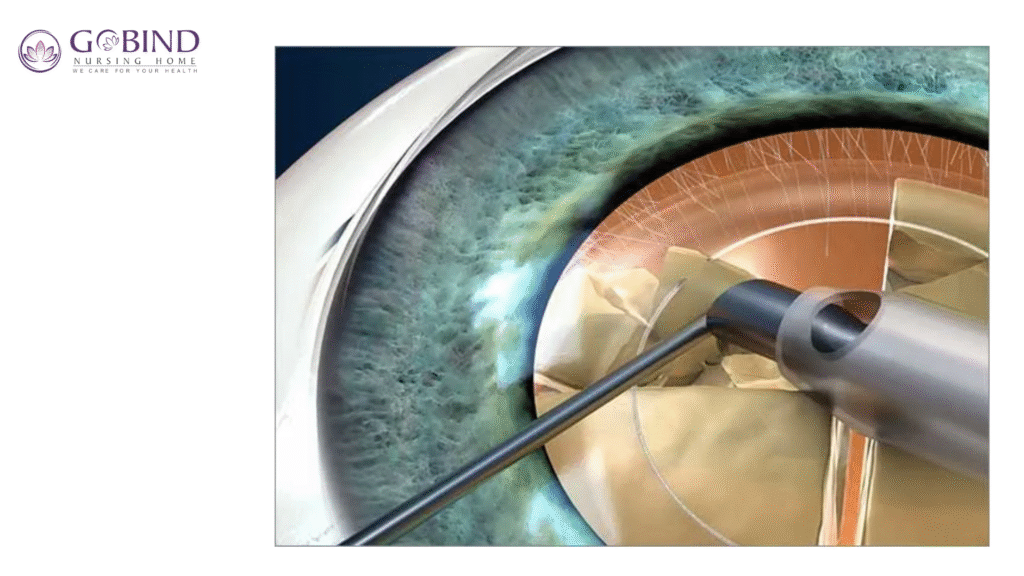
- A phaco probe is inserted through the tiny incision.
- The probe emits high-frequency ultrasound waves, breaking the cataract into microscopic fragments.
- These fragments are then suctioned out simultaneously.
This process is painless, fast, and allows the surgeon to remove the lens without large incisions or stitches.
Step 5: Insertion of the Intraocular Lens (IOL)
After the cloudy lens is removed, the eye needs a new lens to restore clear vision.
- A foldable intraocular lens (IOL) is inserted through the same small incision.
- Once inside, the IOL unfolds and fits perfectly in the natural lens capsule.
- The IOL permanently replaces the natural lens and can correct vision at different distances, depending on the type of lens chosen.
Modern IOL options include:
- Monofocal lenses – focus at one distance (far or near)
- Multifocal lenses – provide vision at near, intermediate, and far distances
- Toric lenses – correct astigmatism
- EDOF lenses – extended depth of focus for continuous vision
Step 6: Sealing the Incision
The tiny incision is self-sealing, so no sutures are required.
- This reduces the risk of infection.
- Minimizes post-operative discomfort.
- Allows for rapid visual recovery, usually within 24–48 hours.
A protective eye shield may be placed for a short period after surgery to prevent accidental rubbing or pressure.
Step 7: Post-Operative Care
After phaco surgery, proper care is essential for optimal healing:
Do’s:
- Use prescribed antibiotic and anti-inflammatory eye drops
- Wear protective glasses to prevent dust and sunlight irritation
- Attend follow-up appointments with your ophthalmologist
Don’ts:
- Avoid rubbing or pressing the eye
- Avoid swimming, eye makeup, or heavy lifting for at least 2 weeks
- Avoid dusty or smoky environments if possible
Most patients can resume normal activities within a few days, and complete recovery usually occurs within 2–3 weeks.

Advantages of Phacoemulsification
Phaco surgery is the most advanced method of cataract removal, offering multiple benefits:
- Minimally invasive: Tiny incision and no stitches.
- Rapid recovery: Vision improves within 24–48 hours.
- Less discomfort: Topical anesthesia avoids injections.
- High precision: Ultrasound technology ensures accurate lens removal.
- Customizable lenses: Corrects nearsightedness, farsightedness, and astigmatism.
- Safe and effective: Over 98% success rate worldwide.
Who Can Benefit From Phaco Surgery?
Phaco surgery is suitable for:
- Age-related cataracts
- Cataracts caused by diabetes or medications
- Early or moderate cataracts
- Patients seeking quick recovery and modern lens options
Very advanced or complicated cataracts may require alternative methods, but phaco surgery is the preferred choice for most patients.
Why Choose a Skilled Surgeon
The success of phaco surgery depends on the surgeon’s skill and experience.
For patients in Hisar and nearby areas, Dr. Ripan Kaur Kamra,Dr. Bindiya Dhupper,Dr Gulshan Mehta at Gobind Eye Care is a leading cataract specialist:
- Expertise in advanced phacoemulsification
- Personalized patient care and consultation
- Modern equipment and safe, stitch-less procedures
Choosing an experienced surgeon ensures optimal visual outcomes and minimal complications.
Summary Table: Step-by-Step Phaco Surgery
| Step | Description |
| 1. Pre-Operative Preparation | Eye examination, medication, anesthesia, sterilization |
| 2. Micro Incision | Tiny 2–2.8 mm incision for access |
| 3. Capsulorhexis | Circular opening in lens capsule |
| 4. Ultrasound Emulsification | Cataract broken into fragments and suctioned out |
| 5. IOL Insertion | Foldable lens implanted through same incision |
| 6. Incision Sealing | Self-sealing, no stitches needed |
| 7. Post-Operative Care | Eye drops, protective glasses, follow-ups, activity precautions |
Conclusion
Phacoemulsification is a modern miracle in cataract surgery. Its small incision, rapid recovery, high precision, and customizable lens options make it the preferred choice for patients seeking clear vision without discomfort.
Understanding the step-by-step process helps patients feel confident and prepared for surgery. With proper care and an experienced ophthalmologist like Dr. Ripan Kaur Kamra, Dr Gulshan Mehta, Dr Bindiya Dhupper at Gobind Eye Care, Hisar, most patients experience fast, safe, and life-changing vision restoration.
Clear vision is just one procedure away — and phacoemulsification makes it simpler than ever.