
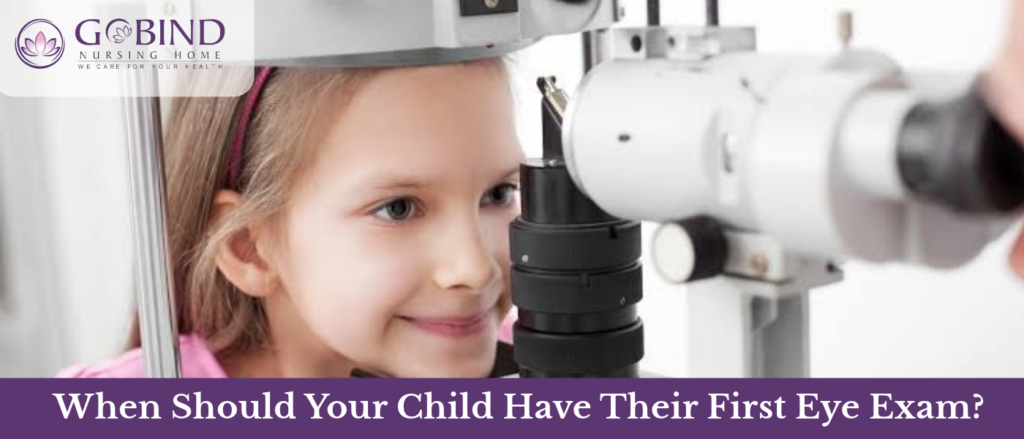
A child’s vision plays an important role in learning, communication, coordination, and overall development. But unlike adults, children may not always realize that their vision is blurry or that something is wrong with their eyes. This is why knowing when your child should have their first eye exam is an important part of responsible eye care.
Many parents assume that an eye examination is only necessary when a child complains about poor vision. In reality, some childhood eye problems can develop without obvious symptoms. Conditions such as refractive errors, lazy eye (amblyopia), squint, and other vision problems may be easier to manage when identified early.
Regular examinations by an eye doctor can help detect these issues and support healthy visual development. Whether your child needs glasses, monitoring, medical eye treatment, or, in rare cases, a procedure such as eye surgery, early evaluation can make a meaningful difference.
When Should a Child Have Their First Eye Exam?
A child’s first comprehensive eye examination does not necessarily need to wait until they start school.
For most children, a useful schedule is:
- Newborn period: Basic eye screening is generally performed as part of routine newborn care.
- Around 6 months: An eye examination can help assess how the eyes are developing and working together.
- Around 3 years: A more detailed vision assessment can identify common childhood eye problems.
- Before starting school: A comprehensive examination is recommended to make sure the child is ready for the visual demands of reading, writing, and classroom learning.
- After school begins: Regular examinations should continue according to the child’s needs and the recommendation of an eye care professional.
Children who have risk factors or symptoms may need to be examined earlier or more frequently.
Why Is an Early Eye Exam Important?
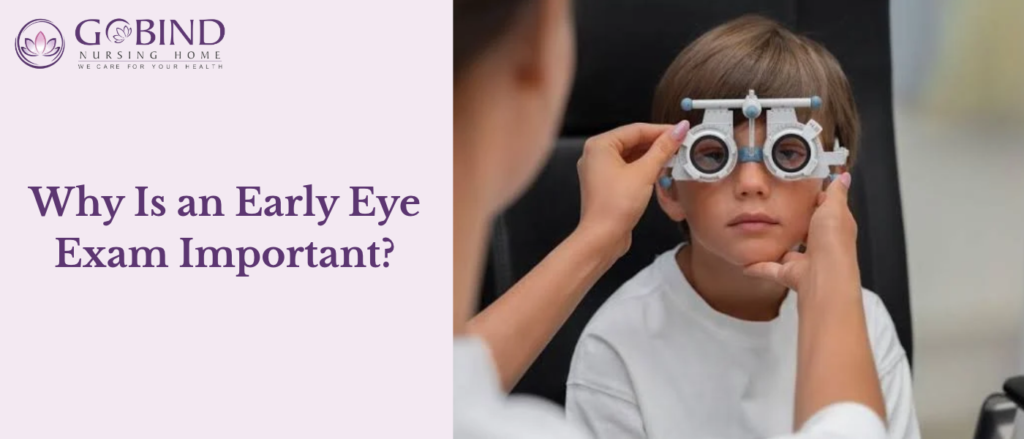
The visual system develops rapidly during childhood. If one eye consistently provides a much clearer image than the other, the brain may gradually begin relying more heavily on the stronger eye. This can contribute to amblyopia, commonly called lazy eye.
Early detection gives parents and doctors an opportunity to address vision problems while the child’s visual system is still developing.
An eye examination can help identify:
- Nearsightedness (myopia)
- Farsightedness (hyperopia)
- Astigmatism
- Lazy eye (amblyopia)
- Squint or crossed eyes (strabismus)
- Difficulty focusing
- Problems with eye coordination
- Certain eye diseases or abnormalities
- Vision problems that may affect learning
The goal of children’s eye care is not simply to determine whether a child needs glasses. It is to make sure their eyes are developing properly and that both eyes are working together effectively.
What Are the Signs That Your Child Needs an Eye Exam?
Sometimes children do not complain about their vision because they think the way they see is normal. Parents therefore need to pay attention to changes in their behavior.
Watch for These Warning Signs
Your child may benefit from an eye examination if they:
- Frequently squint or close one eye
- Sit very close to the television or computer screen
- Hold books or mobile devices unusually close to their face
- Frequently rub their eyes
- Tilt or turn their head while looking at something
- Complain of headaches, especially after reading
- Have difficulty reading or concentrating
- Lose their place while reading
- Avoid activities that require seeing things at a distance
- Cover one eye while watching or reading
- Have frequent eye watering or redness
- Show unusual sensitivity to light
- Have one eye that turns in, out, up, or down
- Struggle to recognize objects or people from a distance
These signs do not automatically mean that your child has an eye disorder. However, they are good reasons to consult an eye doctor.
Does Your Child Need an Eye Exam Before School?
Yes. A school-age child depends heavily on vision for learning.
Reading from a book, seeing the classroom board, writing, recognizing letters, using computers, and participating in sports all require effective vision. A child with an undetected vision problem may have difficulty keeping up in class even when their hearing and learning abilities are normal.
Sometimes poor academic performance is mistakenly considered a concentration or learning problem when an underlying vision issue may be contributing to the difficulty.
A pre-school or school-entry eye examination can help identify problems before they interfere significantly with education.
What Happens During a Child’s Eye Examination?
Parents often worry that their young child will not cooperate during an eye examination. Fortunately, children’s eye examinations can be adapted to their age and ability to respond.
Depending on the child’s age, an eye doctor may assess:
Visual Acuity
The doctor checks how clearly the child can see objects at different distances. Older children may read letters or symbols, while younger children can be assessed using age-appropriate pictures or shapes.
Eye Alignment
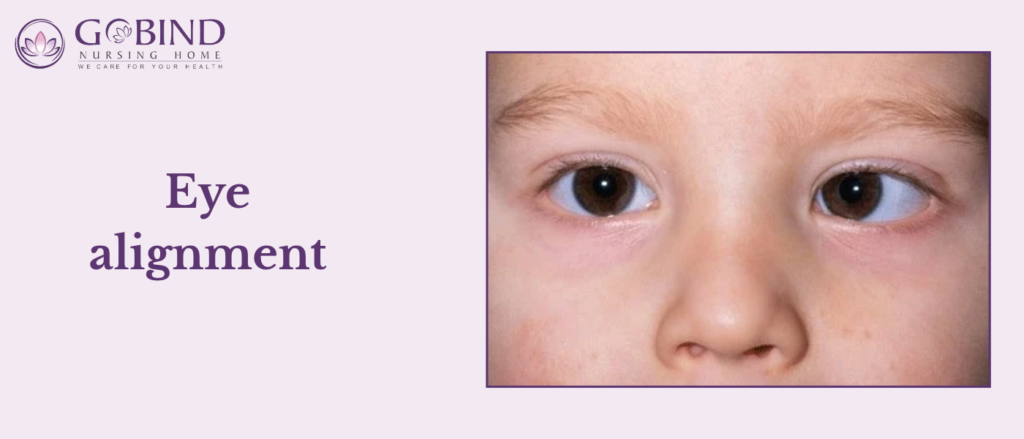
The doctor checks whether both eyes are properly aligned and whether they work together.
Eye Movement
Eye movements and coordination may be evaluated to identify difficulties with tracking or focusing.
Refractive Error
The examination can determine whether the child may need glasses for myopia, hyperopia, or astigmatism.
Overall Eye Health
The doctor may examine different structures of the eye to look for abnormalities or signs of disease.
In some cases, eye drops may be used to temporarily relax the focusing muscles and obtain a more accurate measurement of the child’s prescription.
Which Children May Need Earlier or More Frequent Eye Exams?
Not every child has the same level of risk. An eye doctor may recommend earlier or more frequent examinations if a child has:
- A family history of significant eye problems
- A known vision problem
- A history of premature birth
- Developmental concerns
- A previous eye injury
- Noticeable eye misalignment
- A significant difference in vision between the two eyes
- Existing glasses or contact lens needs
- Symptoms that are changing or worsening
Parents should discuss the appropriate examination schedule with their child’s eye care professional.
Final Takeaway
Your child’s vision is closely connected to learning, development, confidence, and everyday activities. Waiting until a child complains about blurry vision may mean missing an opportunity to identify a problem earlier.
A timely eye examination can help detect refractive errors, lazy eye, squint, and other conditions while the visual system is still developing. If you notice unusual visual behavior or have concerns about your child’s eyesight, consult an eye doctor rather than waiting for the symptoms to become more noticeable.
Regular check-ups, healthy habits, and timely eye treatment are all important parts of lifelong eye care. For parents seeking professional guidance, Gobind Nursing Home can be a healthcare option to explore for appropriate eye evaluation and treatment.